Most brands hire a digital marketing agency after a bad quarter, a flat traffic report, or a competitor suddenly appearing above them in search. The decision is often rushed. That's where the real risk lives. A high-performing agency in 2026 is one that combines measurable SEO fundamentals with fluency in AI search, structured reporting, and the commercial honesty to tell you when a channel isn't working. This guide gives you the criteria and the questions to make that call clearly.
Quick Answer: The seven qualities that define a high-performing digital marketing agency today are: a clear service scope with no hidden hand-offs, proven SEO and AI search competency, data-driven reporting tied to revenue, a transparent pricing model, strong E-E-A-T signals in their own content, a defined onboarding and communication rhythm, and a track record in your specific channel mix. Check all seven before signing.
Why Most Agency Evaluations Go Wrong
The standard approach to hiring a marketing agency is broken. Brands compare decks, check follower counts, and shortlist whoever has a client logo they recognise. None of that predicts performance. What actually predicts performance is whether the agency understands how search and buyer behaviour have shifted, whether they can show causality between their work and revenue, and whether their process survives the first 90 days when the novelty wears off.
Many marketing leaders lack confidence in their agency's ability to measure ROI across channels. That's not a measurement tool problem. It's a vetting problem.
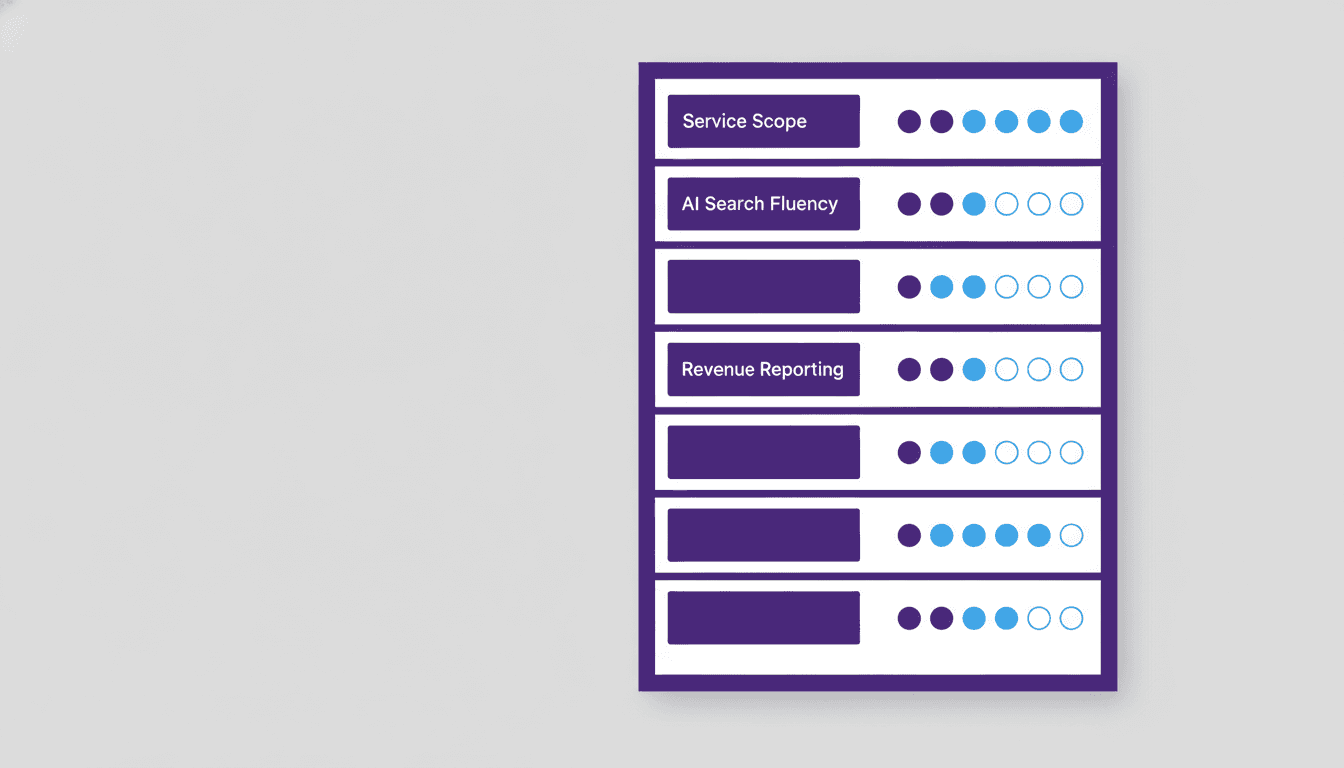
The comparison below gives you a fast orientation before the full criteria.
| Evaluation Dimension | What a weak agency looks like | What a strong agency looks like |
|---|---|---|
| Service scope | Vague bundled retainer | Named deliverables per channel |
| SEO competency | Keywords and backlinks only | Technical, semantic, and AI search coverage |
| Reporting | Traffic and impressions | Revenue attribution and pipeline impact |
| Pricing model | One-size-monthly | Performance or milestone tiers available |
| Communication | Monthly PDF report | Slack/async + live review cadence |
| AI search readiness | No mention of GEO or AEO | Structured content and entity optimisation built in |
| Proof of work | Case study PDFs | Live rankings, audited before/after data |
Use this table as the first filter in any agency conversation.
Quality 1: A Defined Service Scope With No Hidden Hand-Offs
A digital marketing agency should be able to hand you a one-page document that names every deliverable, who produces it, and at what cadence. If the answer involves phrases like "we have partners for that" or "our network handles execution," you are not hiring an agency. You are hiring a broker. White-labelling and sub-contracting are common in the industry and not inherently bad, but they must be disclosed upfront, because the person accountable to you needs to be the person doing the work.
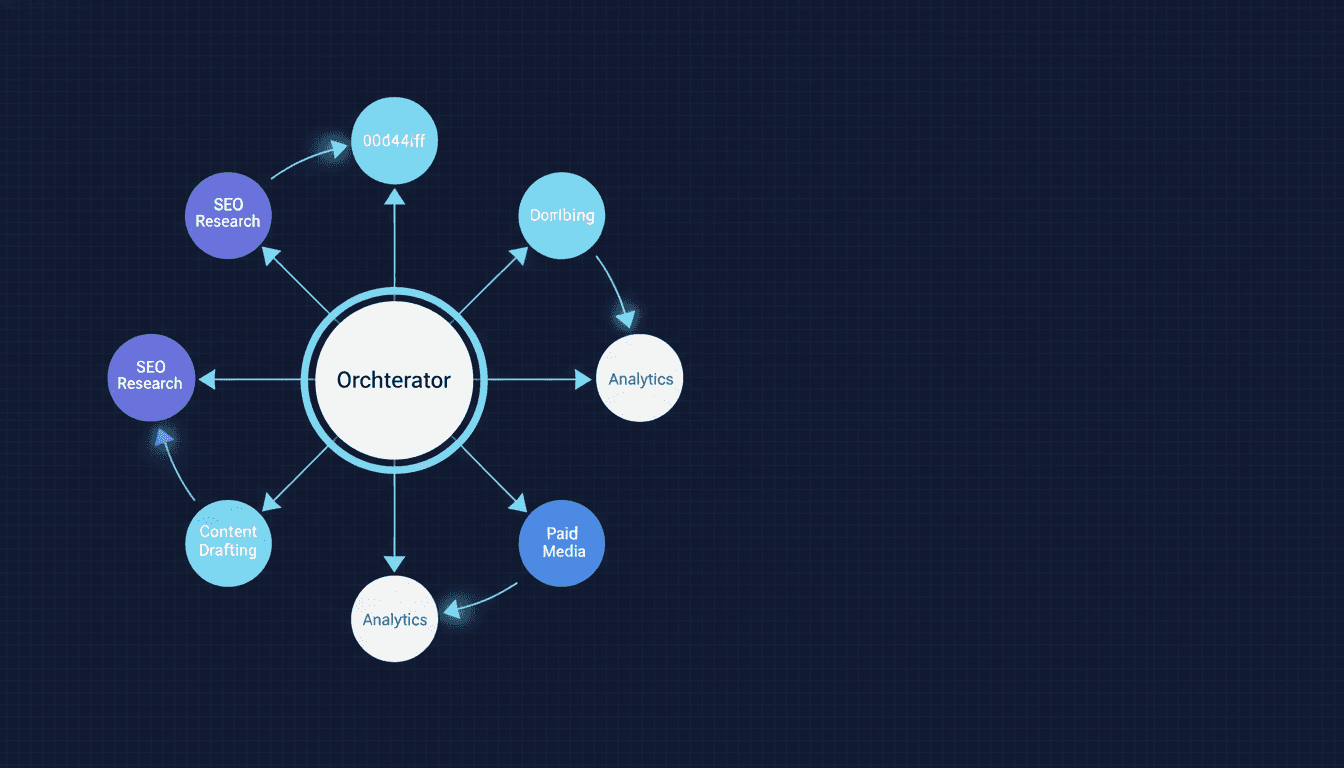
The core digital marketing agency services list you should expect any full-service agency to cover, or clearly exclude, includes: organic search (technical SEO, content, link building), paid search and shopping, paid social, email and lifecycle marketing, conversion rate optimisation, and analytics infrastructure. Specialists who do one or two of these well are often better than generalists who do six poorly. The mistake is assuming "full-service" means all six are equally strong.
Ask specifically: "Which of these services are built in-house, and which are fulfilled by third parties?"
Quality 2: Fluency in Modern Search, Not Just Keywords
Search in 2026 is not the same game it was in 2022. Google's AI Overviews appeared on 39.4% of Google desktop searches in June 2026, according to Comscore's Q2 2026 AI Intelligence Report (published September 22, 2026). ChatGPT, Perplexity, and Gemini answer millions of commercial questions without sending a click. An agency that still measures success by keyword rankings alone is optimising for a shrinking slice of the visibility pie.
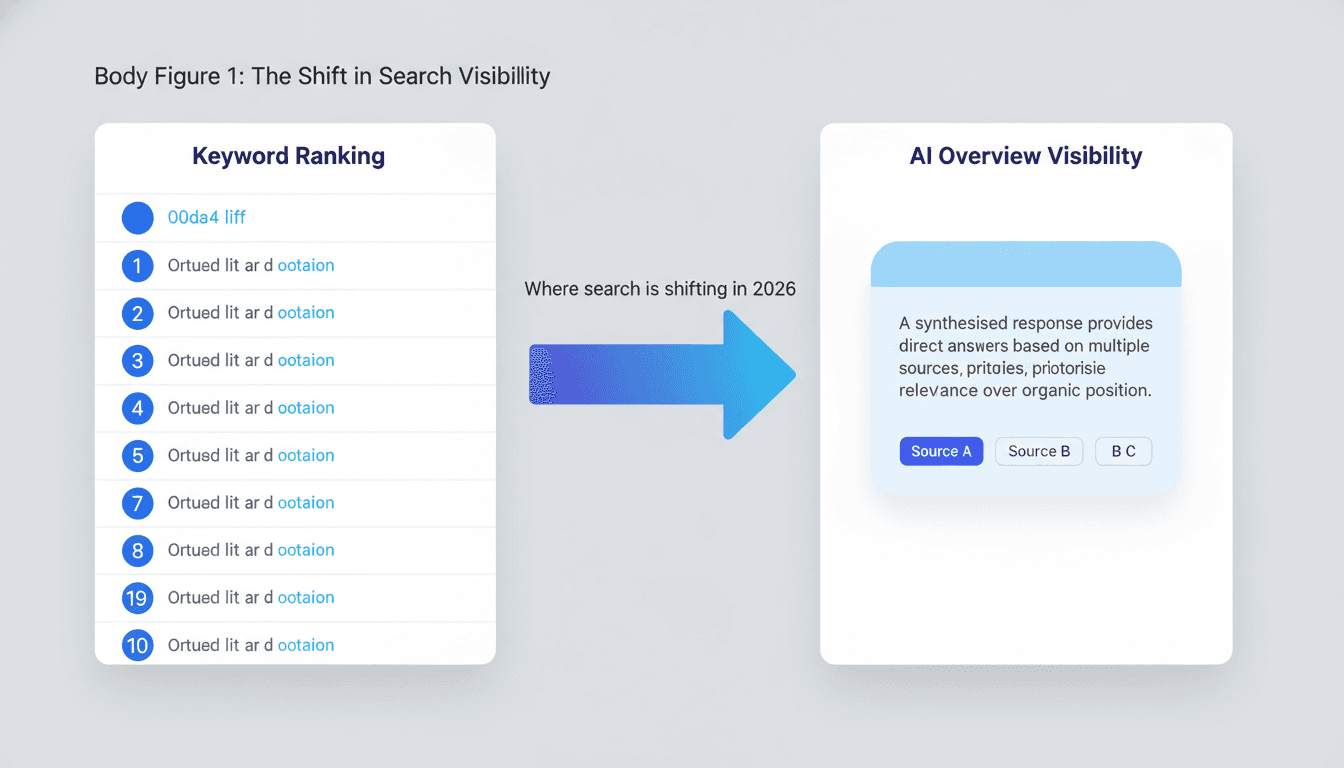
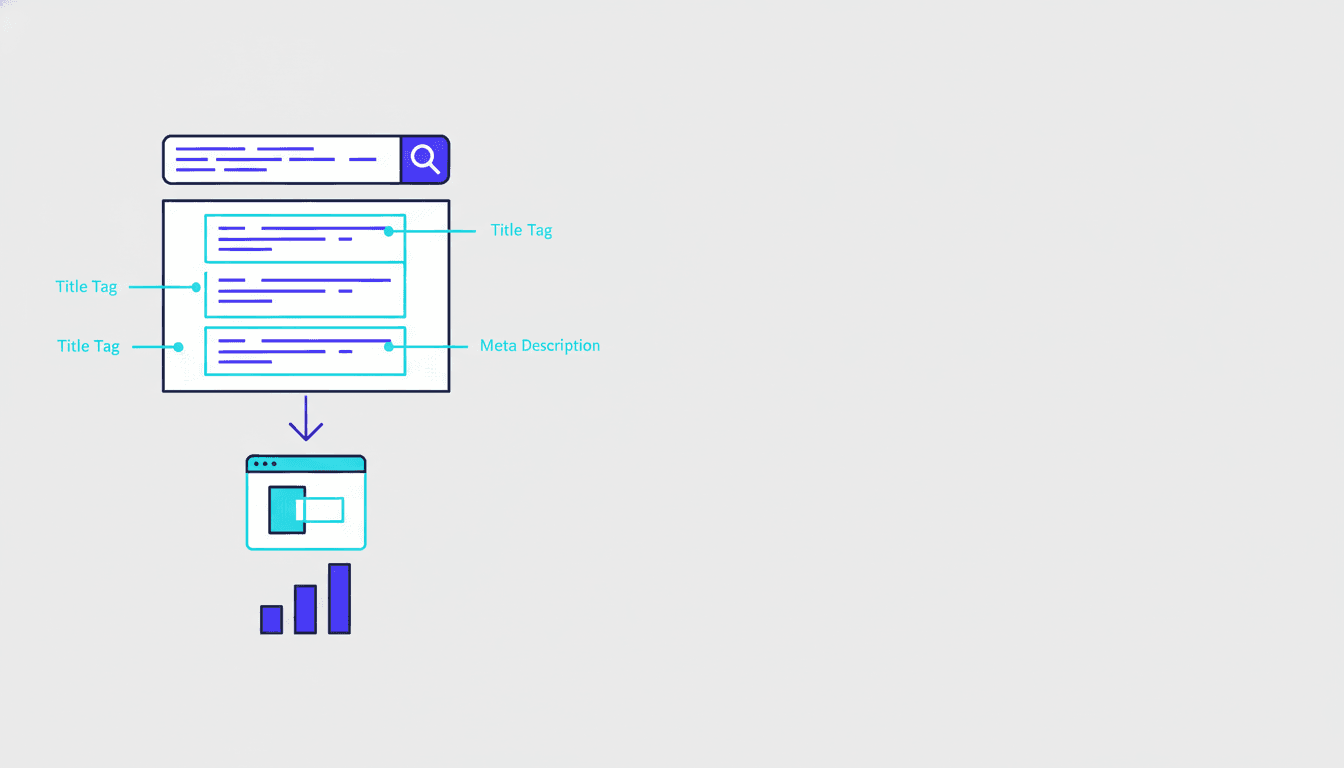
A high-performing agency understands the full stack: technical SEO to make your site crawlable and fast, semantic content structured around entities and intent, E-E-A-T signals that make your brand citable in AI answers, and schema markup that feeds structured data into knowledge panels and rich results. Our SEO audit guide covers the technical layer in detail if you want a benchmark for what "done right" looks like.
When you vet a marketing agency for SEO, ask them to show you a client example where they improved AI Overview or featured snippet presence, not just page-one rankings. Most can't. The ones who can are building content differently.
Questions to Ask a Digital Marketing Agency About Search
- How do you structure content to rank in both traditional search and AI-generated answers?
- What does your technical SEO process look like at the start of an engagement?
- Can you show a before/after content audit that improved organic visibility?
- How do you track traffic from AI-powered search interfaces where referral data is absent?
If the answers are vague, the agency is probably a few years behind where search has moved.
Quality 3: Reporting That Connects to Revenue
The agency that reports on impressions and session duration is not your growth partner. It's your traffic reporter. There is a difference, and it costs brands real money when they don't spot it.
Brands with revenue-attributed marketing reporting are better placed to increase their marketing budget year-over-year, because they can prove the return. That kind of reporting requires the agency to have access to your CRM, your conversion events, and ideally your pipeline data. Agencies that resist this access are usually protecting their numbers from scrutiny.
At minimum, a strong agency provides: channel-level revenue or lead attribution, a comparison of cost per acquisition across paid and organic, organic visibility trends that map to business seasonality, and a clear view of which content or campaigns moved the needle. Monthly traffic graphs with no dollar sign attached are not reporting. They are noise.
Our guide to SEO services goes deeper on what a proper measurement framework looks like if you want to pressure-test what your current agency delivers.
Quality 4: Honest Pricing With No Black-Box Retainers
Digital marketing agency pricing models range from pure retainers to performance-based fees to project-based scopes. None is universally best. The warning sign is opacity: a retainer with no itemised breakdown of what you are paying for, or a performance model where the agency defines what counts as a conversion.
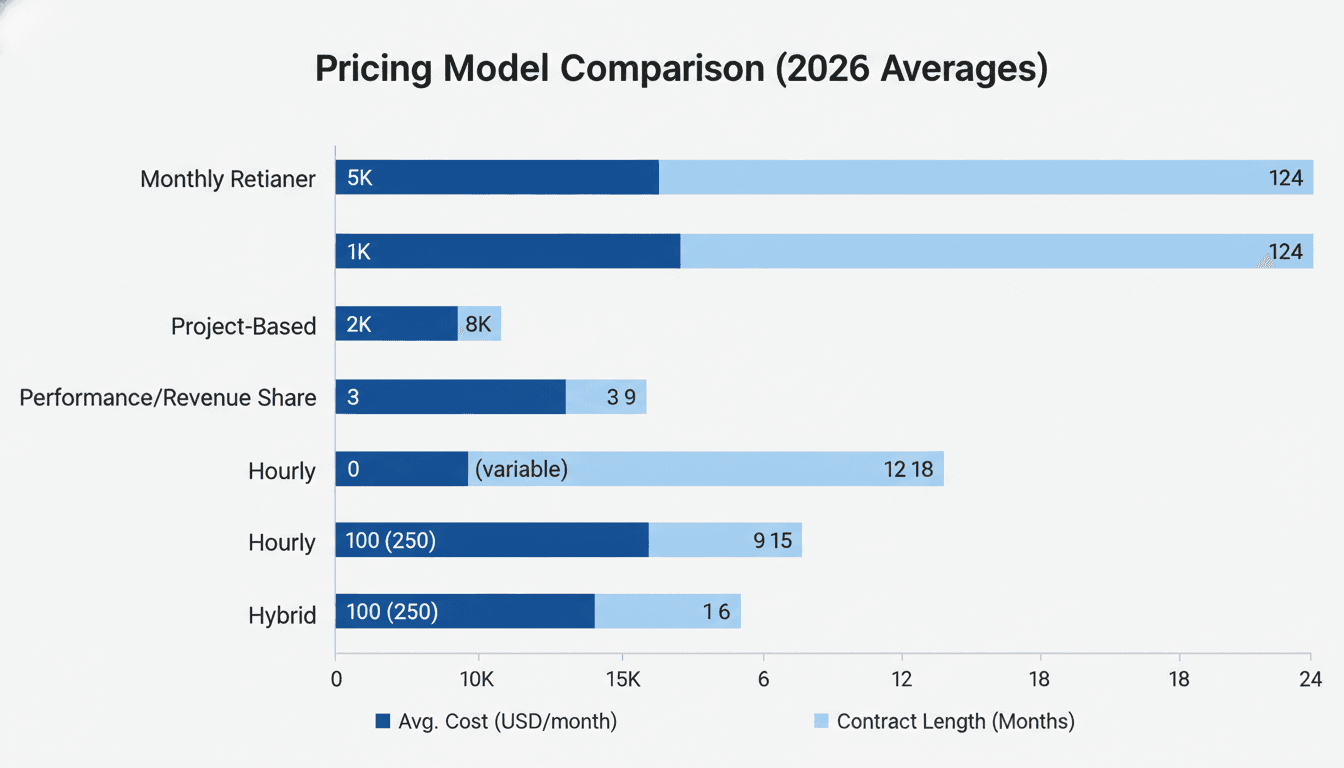
The most common models in 2026:
| Pricing Model | Best For | Watch Out For |
|---|---|---|
| Monthly retainer | Ongoing SEO, content, email | No deliverables tied to cost |
| Project-based | Audits, site migrations, campaigns | Scope creep after sign-off |
| Performance / revenue share | E-commerce, lead gen | Agency cherry-picks easy wins |
| Hourly | Ad-hoc consulting | Hard to budget; incentivises hours over outcomes |
| Hybrid (retainer + performance) | Growth-stage brands | Complexity; needs clear KPI definitions upfront |
Project Rankup publishes its own pricing transparently for this reason. Brands deserve to know what they are paying for before committing.
The question to ask any agency: "Can you show me a sample invoice or a scope-of-work document from a similar client?" If they won't, treat that as a signal.
Quality 5: E-E-A-T That Shows Up in Their Own Work
An agency that can't rank its own content has a credibility problem. This is not about ego. It's about proof. If the agency advises you on E-E-A-T (Experience, Expertise, Authoritativeness, and Trustworthiness) but their own site has thin author bios, no external citations, and no first-hand case data, they are selling a service they haven't earned the right to sell.
Google's Search Quality Evaluator Guidelines treat E-E-A-T as a primary signal for ranking in sensitive and competitive verticals. By 2026, this extends to AI-generated answer engines too. Perplexity and ChatGPT both surface sources that have strong author attribution, cited data, and a recognisable brand entity.
When you audit an agency's own site, check: Do their posts name the author with a real bio and credentials? Do they cite primary sources? Do they have a Google Business Profile with real reviews? Do they appear in any AI-generated answers when you search for their core topic? That last one is the new acid test.
For brands in India particularly, the bar for E-E-A-T is rising fast. Our guide on how to improve E-E-A-T for Indian websites explains what that looks like at a practical level.
Quality 6: A Communication Structure That Survives Month Three
Every agency is attentive during the pitch. The real question is what month three looks like when the new-client energy has faded and the work becomes routine. The best agencies build communication structure into the contract: a defined async channel (usually Slack or a project tool), a fixed bi-weekly or monthly review call with a prepared agenda, a named account lead who has decision-making authority, and an escalation path if something breaks.
The absence of structure is how good agencies become frustrating ones. You end up chasing updates, re-explaining context on every call, and getting reports that weren't tied to the goals you set in week one.
A useful test: ask the agency to describe a time a campaign underperformed and how they communicated it to the client. A strong agency will tell you what broke, when they flagged it, what they changed, and what the result was. A weak one will tell you about a success story instead.
Quality 7: Proven Track Record in Your Specific Channel Mix
A digital marketing agency with strong paid social results for a direct-to-consumer fashion brand is not automatically the right fit for a B2B SaaS company trying to build organic pipeline. Channel expertise does not transfer cleanly across business models. And in 2026, this matters more than ever because the gap between specialists and generalists has widened.
Brands working with agencies that have deep vertical expertise often outperform those using generalist agencies on conversion rates in their primary acquisition channel. The mechanism is simple: specialists have seen more failure modes in your channel and have built more refined playbooks around them.
For SaaS brands, the agency needs fluency in product-led content and bottom-of-funnel SEO. For e-commerce, it's feed optimisation, shopping ads, and CRO. For local brands, it's Google Business Profile management, local schema, and review velocity. Our piece on digital marketing for SaaS outlines what a SaaS-specific agency engagement should cover at each growth stage.
Ask for three client references in your specific channel and business model. Not logos. Actual people you can call.
The Hiring a Digital Marketing Agency Checklist
Before you sign anything, run through these:
- Can they name every deliverable and who produces it, in-house or not?
- Do they understand AI search, AEO, and GEO, not just traditional keyword rankings?
- Can they show revenue or pipeline attribution from a current or past client?
- Is their pricing model itemised and tied to named outcomes?
- Does their own site demonstrate the E-E-A-T signals they promise to build for you?
- Do they have a defined communication structure in the contract?
- Can they provide references in your specific channel and business model?
- Have they done a technical SEO audit on your site before proposing a scope?
If you can check all eight, the risk of a bad engagement drops sharply. If you are missing three or more, keep looking.
What to Look for in a Digital Marketing Agency: The Short Version
Pick the agency that can show you the work, name the person doing it, and explain how they will tell you when something isn't working. Avoid the agency that leads with the pitch deck and delays the scope conversation.
- Pick a full-service agency if your brand has multiple acquisition channels and needs integrated planning across SEO, paid, email, and content.
- Pick a specialist agency if one channel drives most of your revenue and you need depth over breadth.
- Pick a boutique with AI search focus if you are in a competitive vertical where AI Overviews and answer engine citations are eroding your click-through rates.
- Pause the process entirely if no agency on your shortlist can answer the eight checklist questions above with evidence, not assurances.
The best digital marketing agency for your brand is the one that already understands your channel, can prove results in it, and communicates like a partner rather than a vendor.
Frequently asked questions
What is a digital marketing agency?
A digital marketing agency is a company hired to plan and execute online marketing on behalf of a brand. Services typically span SEO, paid search, paid social, content marketing, email, and analytics. Unlike a freelancer, an agency provides a team structure, broader channel coverage, and accountability across the full marketing funnel.
How do I choose the best digital marketing agency for my business?
Start with channel fit: find an agency with a proven track record in the specific channels that drive your revenue. Then verify their reporting framework (can they show revenue attribution?), their AI search fluency, and their communication structure. Always ask for client references in your vertical before signing a contract.
What does a digital marketing agency cost?
Pricing varies widely. Monthly retainers for small brands typically range from $1,500 to $5,000. Mid-market engagements run $5,000 to $20,000 per month. Full-service enterprise retainers can exceed $50,000. Performance-based and hybrid models exist but require very clear KPI definitions upfront to avoid disputes over what counts as a result.
How is a digital marketing agency different from an in-house team or freelancer?
An in-house team offers deep brand knowledge but limited channel breadth. A freelancer offers cost efficiency but single-skill coverage. A digital marketing agency sits between the two: broader channel expertise than a freelancer, lower cost and faster ramp than a full in-house build, but with less brand immersion than either. Each fits a different growth stage.
What questions should I ask before hiring a digital marketing agency?
The most important: Who exactly produces my deliverables? How do you attribute revenue to your work? Can you show a technical SEO audit from a recent client? How do you handle AI search and featured snippet optimisation? What does your communication structure look like after the first 90 days? Weak answers to any of these are a signal to keep looking.
What is a digital marketing agency's role in AI search in 2026?
In 2026, a competent digital marketing agency must optimise for AI-generated answers in tools like Google's AI Overviews, ChatGPT, and Perplexity, not just traditional page-one rankings. This means structuring content for entity recognition, building E-E-A-T signals that AI answer engines treat as credibility markers, and tracking visibility in channels that don't always pass referral data.
What is digital marketing agency pricing based on?
Pricing is based on scope, channel mix, and whether the model is retainer, project, or performance-based. Retainers are priced on the hours and team seniority needed to deliver named outputs. Project fees reflect defined scope. Performance models are tied to conversion targets. The most common mistake brands make is choosing the cheapest retainer without checking what it actually covers.
Key Takeaways
- A high-performing digital marketing agency defines its deliverables, names who produces them, and ties reporting to revenue, not just traffic.
- AI search fluency is now a baseline requirement. Agencies that only optimise for traditional rankings are already behind.
- Transparent pricing and itemised scopes protect you from retainers that generate reports but not results.
- E-E-A-T signals in an agency's own content are the best proxy for their ability to build those signals for you.
- Channel-specific experience matters more than a long services list. Ask for references in your exact channel and business model.
- Use the eight-question checklist before signing. It filters out most bad engagements before they start.
- If your current agency can't answer those questions, a content audit is a clean, low-risk way to find out exactly where the gaps are.