Digital marketing for SaaS demands a fundamentally different playbook than traditional product marketing. Where an e-commerce brand optimizes for one-time purchases, SaaS companies must engineer marketing systems that acquire customers at a cost they can recoup within 12 to 18 months, then retain and expand those accounts for years. The subscription model changes everything: your marketing ROI calculation stretches across the entire customer lifetime, trial conversion rates matter more than traffic volume, and product experience becomes inseparable from brand perception.
The global SaaS market is projected to reach $819 billion by 2030, according to Fortune Business Insights. That growth creates opportunity but also brutal competition. Hundreds of new tools launch monthly in every category. Standing out requires marketing that does more than generate leads; it must educate, build trust through product experience, and create expansion loops that compound growth. This guide walks through the strategies, metrics, and channels that separate SaaS companies achieving sustainable growth from those burning cash on empty pipelines.
What Makes Digital Marketing for SaaS Companies Different?
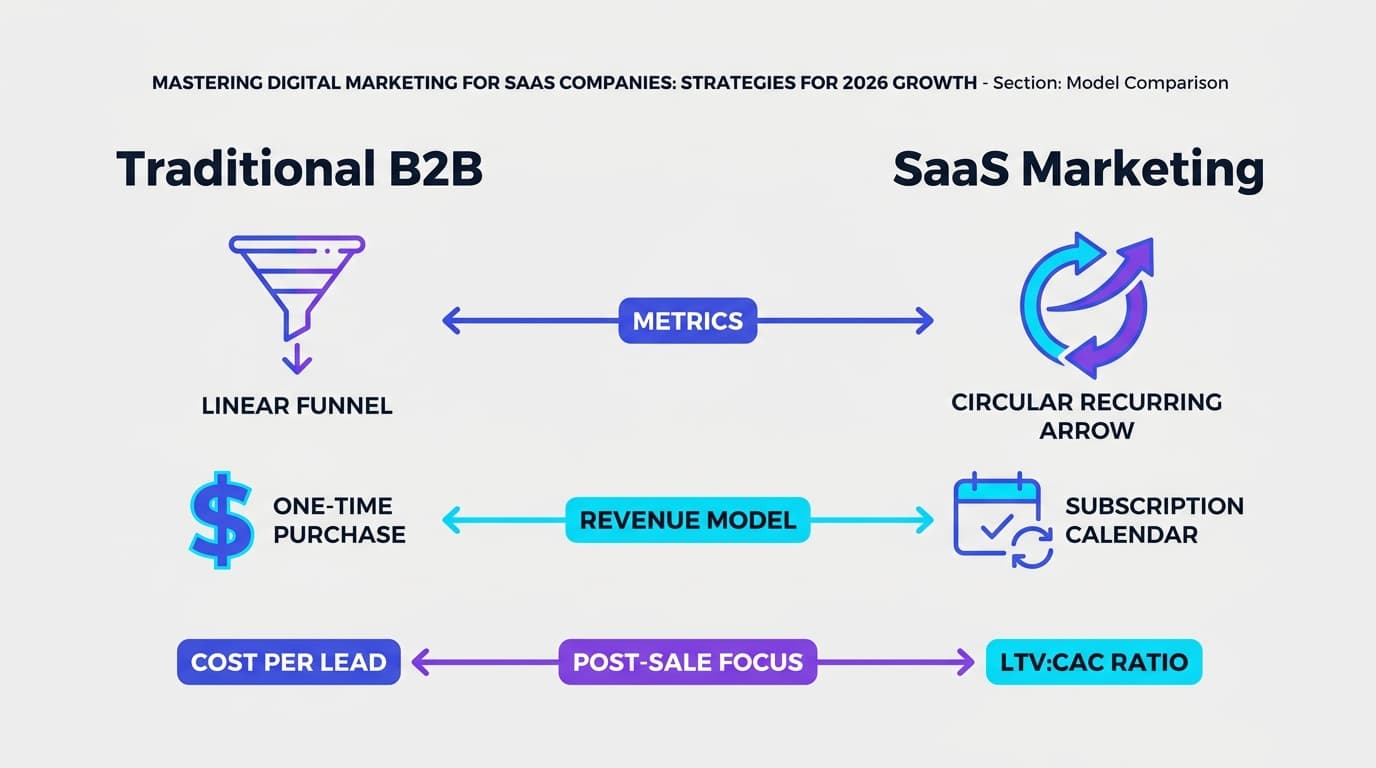
Digital marketing for SaaS companies operates on subscription economics rather than transactional math. A single sale matters less than the cumulative revenue that customer generates over months or years, which fundamentally reshapes how you allocate budget, measure success, and structure campaigns. Traditional B2B marketing optimizes for the close; SaaS marketing optimizes for the relationship.
Three structural differences define the SaaS marketing challenge:
Revenue recognition is deferred. When someone signs up for a $99/month plan, you have not earned $1,188. You have earned $99 and a promise. Marketing must account for churn risk in every acquisition calculation. Spending $500 to acquire a customer who churns after three months means you lost $203.
The product can sell itself. Free trials and freemium tiers let prospects experience value before committing. This creates product-led growth opportunities unavailable to traditional software, but it also means marketing must seamlessly hand off to product teams at the trial stage.
Expansion revenue compounds growth. Upsells, cross-sells, and seat expansions can generate 30% or more of annual revenue for mature SaaS companies. Marketing does not stop at acquisition; it drives adoption and expansion inside existing accounts.
| Factor | Traditional B2B Marketing | SaaS Marketing |
|---|---|---|
| Primary metric | Cost per lead, deal close rate | Customer acquisition cost, LTV:CAC ratio |
| Sales cycle | Linear funnel to contract | Trial or freemium with product-led conversion |
| Revenue model | One-time or annual license | Monthly recurring revenue |
| Post-sale focus | Support and renewal | Onboarding, adoption, expansion |
| Budget allocation | Heavy on demand gen | Balanced across acquisition, activation, retention |
This table clarifies why copying tactics from enterprise software or e-commerce rarely works for SaaS. The economics demand a different approach.
The SaaS Marketing Metrics That Actually Matter
SaaS companies live and die by a specific set of metrics that traditional marketers rarely encounter. Understanding these numbers is not optional; it is the foundation for every budget decision and campaign evaluation. Customer acquisition cost saas benchmarks vary by segment, but the relationships between metrics remain universal.
Customer Acquisition Cost (CAC)
CAC measures the fully-loaded cost to acquire one new paying customer. Calculate it by dividing total sales and marketing spend for a period by the number of new customers acquired in that same period. Include salaries, tools, ad spend, content production, and agency fees.
A SaaS startup selling to small businesses might target a CAC of $200 to $500. Enterprise-focused companies routinely spend $5,000 to $20,000 per customer. The number itself matters less than its relationship to lifetime value.
Lifetime Value (LTV)
LTV estimates the total revenue a customer generates before churning. The simplest formula: average monthly revenue per customer divided by monthly churn rate. If your average customer pays $100/month and your monthly churn is 2%, LTV equals $5,000.
The benchmark that matters: LTV should be at least three times CAC. Ratios below 3:1 signal unsustainable growth. Ratios above 5:1 often indicate under-investment in growth.
CAC Payback Period
Payback period measures how many months it takes to recover the cost of acquiring a customer. Divide CAC by monthly gross margin per customer. SaaS companies should benchmark a CAC payback period of 12 to 18 months to maintain sustainable growth.
Payback periods exceeding 18 months strain cash flow and limit reinvestment capacity. Shorter payback periods accelerate compounding.
Monthly Recurring Revenue (MRR) and Net Revenue Retention (NRR)
MRR tracks predictable monthly revenue from all active subscriptions. NRR measures revenue retained from existing customers after accounting for churn, downgrades, and expansion. An NRR above 100% means expansion revenue exceeds lost revenue, enabling growth even without new customer acquisition.
Top-performing SaaS companies achieve NRR between 110% and 130%. Marketing contributes to NRR through customer education, feature adoption campaigns, and expansion triggers.
Building a SaaS Conversion Funnel That Actually Converts
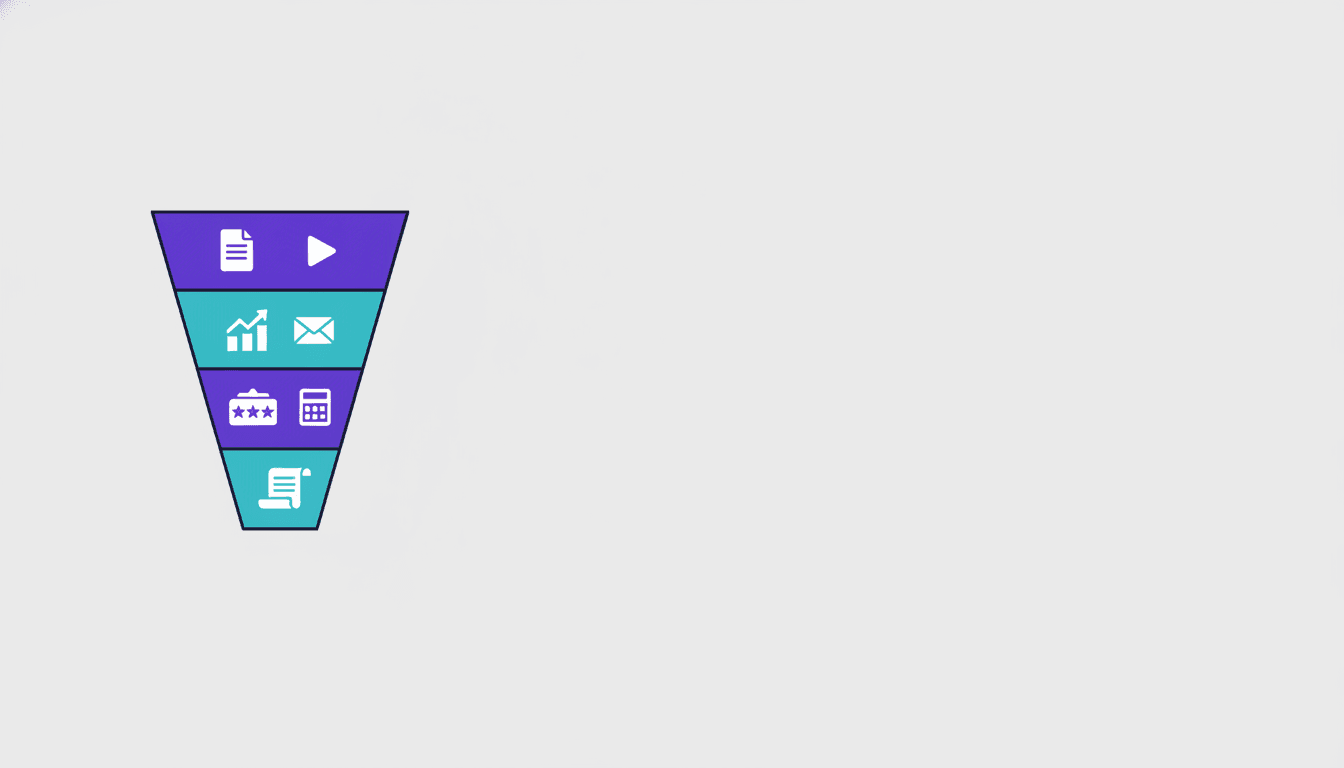
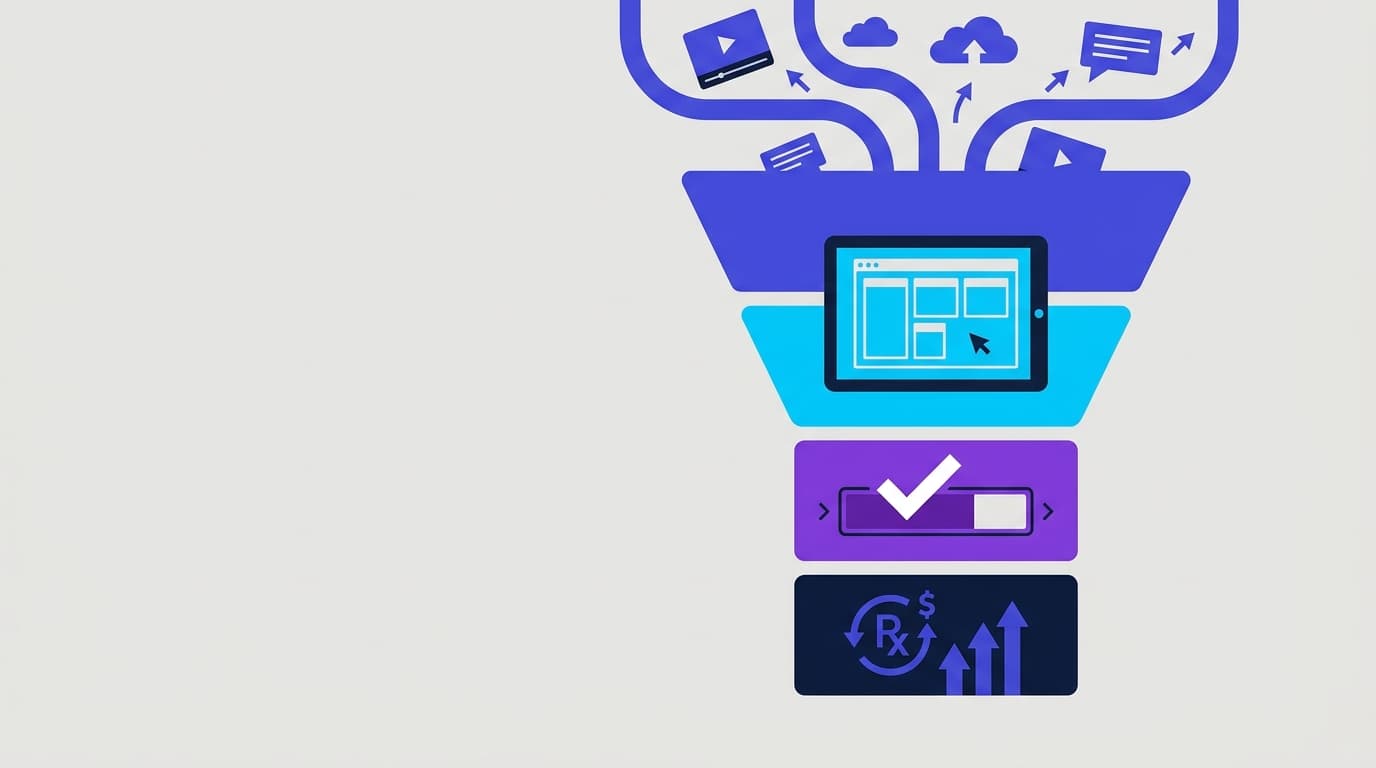
The SaaS funnel diverges from traditional marketing models at the trial stage. Prospects do not move from consideration to purchase; they move from awareness to trial to activation to conversion to expansion. Each stage requires distinct tactics, and the activation stage is where most SaaS companies leak revenue.
Awareness to Trial
Top-of-funnel content drives awareness, but SaaS companies must resist vanity traffic. A blog post generating 10,000 visitors who never trial the product contributes nothing to growth. Content should target prospects with problems your product solves, not general industry interest.
Effective awareness tactics for digital marketing for saas businesses include:
- Comparison pages targeting "[competitor] alternative" searches
- Problem-focused content answering specific pain point queries
- Integration partner content capturing users of complementary tools
- Industry benchmark reports establishing authority and capturing emails
Trial signup should appear throughout the awareness experience. Do not hide the product behind gated content when you could let prospects experience it.
Trial to Activation
Activation measures whether trial users reach the moment where your product delivers value. For a project management tool, activation might mean creating a project and inviting a teammate. For analytics software, it might mean connecting a data source and viewing a first report.
Free trial conversion rates for B2B SaaS average between 15% and 25%, with top performers exceeding 30%, according to Paddle's SaaS Metrics Report. The gap between average and top performers almost always traces back to activation.
Marketing owns trial activation more than many teams realize. Onboarding emails, in-app guidance, and educational content during the trial window directly impact conversion. A prospect who never activates will never convert, regardless of how compelling your initial ad was.
Conversion to Expansion
Paid conversion is not the finish line. Expansion revenue from seat additions, tier upgrades, and add-on purchases often determines whether a SaaS company reaches profitability. Marketing supports expansion through:
- Feature announcement campaigns to existing customers
- Usage milestone emails triggering upgrade conversations
- Customer success content helping users extract more value
- Community building that increases switching costs
Treat your customer base as a marketing channel, not just a support obligation.
Digital Marketing Channels for SaaS: A Prioritization Framework
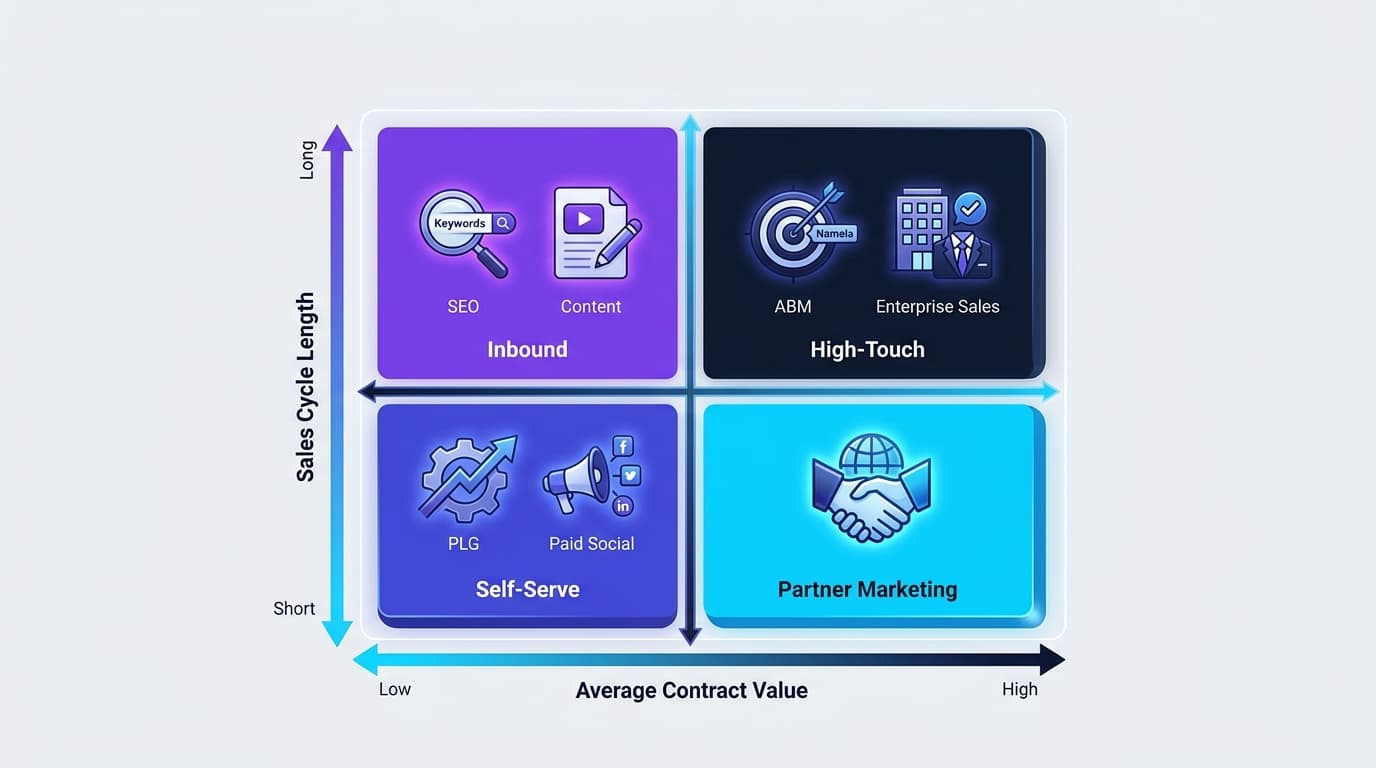
Not every channel suits every SaaS company. A developer tool with a $29/month price point cannot afford enterprise ABM tactics. A $50,000 annual contract product cannot scale through TikTok ads. Channel selection depends on average contract value, sales cycle length, and target buyer behavior.
| Channel | Best For | Typical CAC Impact | Effort Level |
|---|---|---|---|
| SEO and content | Building compounding organic traffic | Low long-term, high initial | High |
| Paid search | Capturing high-intent demand | Medium to high | Medium |
| Product-led growth | Low-touch, high-volume products | Very low | High |
| Account-based marketing | Enterprise, high ACV deals | High | Very high |
| Partner and integration marketing | Established products with ecosystem | Low | Medium |
| Paid social | Brand awareness, retargeting | High | Medium |
SEO for SaaS Startups
Organic search remains the highest-ROI channel for most SaaS companies over a two to three year horizon. The challenge: it requires sustained investment before meaningful results appear. Early-stage companies often abandon SEO too quickly, then later pay inflated CPCs to reach the same audiences.
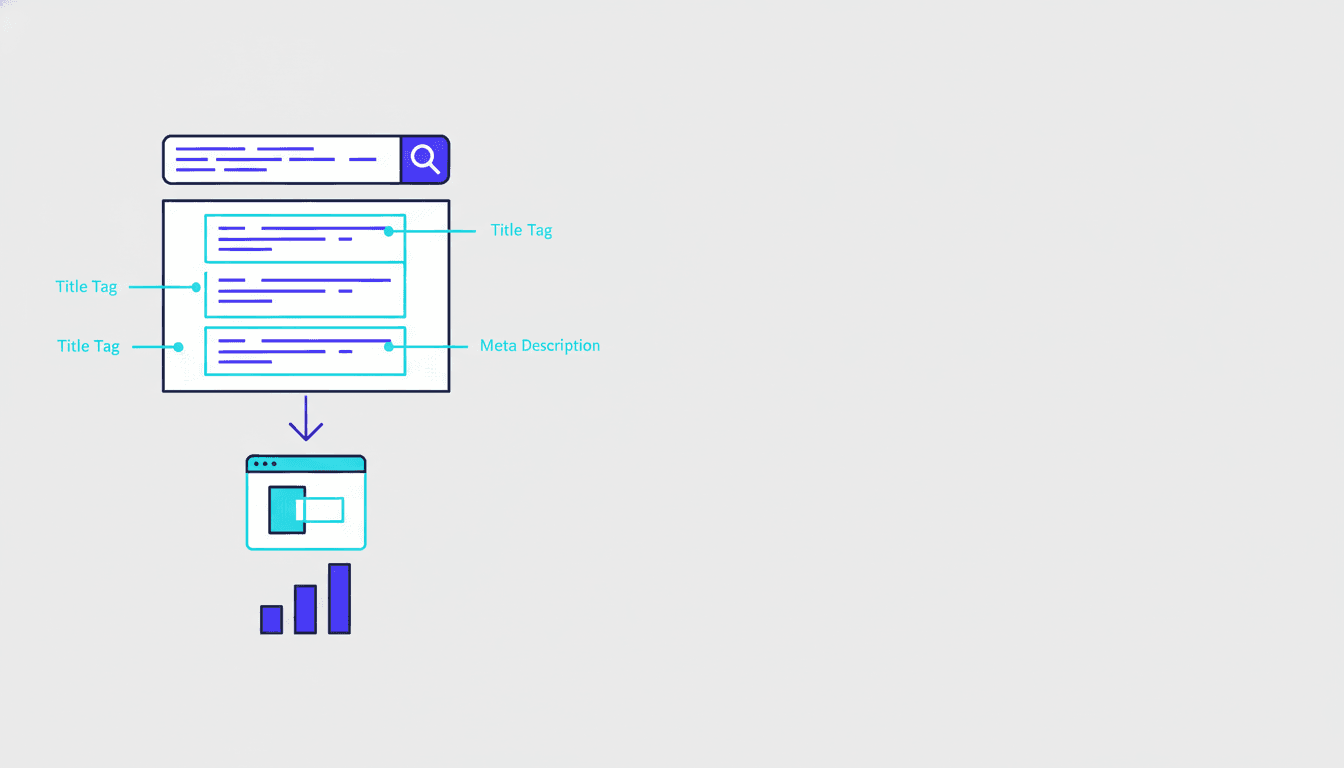
Effective seo for saas startups focuses on bottom-of-funnel content first. Target comparison queries, alternative searches, and specific problem searches before building out educational content. A ranking for "best CRM for real estate agents" converts better than a ranking for "what is CRM."
Tracking keyword rankings across hundreds of target terms requires systematic tooling. Platforms like Project Rankup help marketing teams monitor position changes, identify ranking opportunities, and connect SEO efforts to business outcomes rather than vanity metrics.
Performance Marketing for Software
Paid channels work for SaaS when unit economics support them. Calculate your target CAC, subtract estimated organic and referral acquisition, and determine how much you can spend on paid channels while maintaining a healthy LTV:CAC ratio.
Google Search ads capture existing demand but cannot create it. LinkedIn ads reach professional audiences but carry CPCs of $5 to $15 or higher. Meta ads offer scale but often deliver lower-intent traffic for B2B products.
Performance marketing for software requires tight feedback loops between ad spend and downstream conversion. Track not just signups but trial activations, conversions, and eventually LTV by acquisition source. A channel generating cheap trials that never convert is more expensive than one generating costly trials that become long-term customers.
Content Marketing for SaaS: The Compound Growth Engine
Content marketing for saas differs from general content marketing in one critical way: the goal is product adoption, not just audience building. Every piece should move readers closer to understanding why your product solves their problem, even when the content itself is educational rather than promotional.
Content Types That Convert
Not all content drives SaaS growth equally. Prioritize these formats:
Comparison and alternative content captures prospects actively evaluating solutions. These pages convert at rates three to five times higher than general blog content because readers have already decided to buy something.
Use case guides show specific applications of your product to particular industries or roles. A generic feature page says "track time." A use case guide says "how digital agencies use time tracking to improve project profitability."
Integration documentation ranks for searches from users of complementary tools. If your product integrates with Slack, content targeting "Slack project management" or "Slack time tracking" captures relevant prospects.
Original research and benchmarks earn backlinks and citations, building domain authority that lifts all your content. They also generate press coverage and social sharing that paid content cannot match.
Distribution Beyond Publishing
Content that sits unpromoted rarely finds its audience. Every piece needs a distribution plan:
- Syndicate to relevant communities and forums where your audience gathers
- Repurpose into LinkedIn posts, email sequences, and video scripts
- Pitch to newsletter curators in your space
- Update and republish high-performing content annually
The Project Rankup blog demonstrates how consistent publishing on focused topics builds topical authority over time. Content compounds when each piece supports others through internal linking and shared themes.
Product-Led Growth as Your Marketing Engine
Product-led growth transforms your product into the primary acquisition, conversion, and expansion vehicle. Instead of marketing creating demand that sales closes, the product itself converts free users into paying customers through delivered value.
When PLG Works
PLG succeeds when three conditions exist:
- Users can experience value quickly. If your product requires weeks of setup or training before delivering results, PLG struggles.
- Individual users can adopt without organizational approval. Bottoms-up adoption enables PLG; top-down procurement blocks it.
- The product has natural viral or network effects. Collaboration tools spread through teams. Analytics tools do not.
Digital marketing for b2b saas platforms increasingly incorporates PLG elements even when enterprise sales remain important. A free tier or trial lets marketing generate qualified product users rather than just leads, giving sales teams prospects who already understand the product.
PLG Marketing Tactics
Freemium tiers serve as permanent trials with limited functionality. Users can stay forever at no cost, but power features require payment. This model works when free users generate word-of-mouth or when the marginal cost of free users approaches zero.
In-app prompts guide users toward activation milestones. Contextual nudges outperform batch onboarding emails because they appear at the moment of relevance.
Usage-based upgrade triggers identify expansion opportunities through behavior. A user hitting storage limits or team size caps receives targeted upgrade messaging at the moment of need.
PLG does not eliminate marketing. It changes marketing's role from lead generation to product adoption acceleration.
B2B SaaS Lead Generation That Scales
B2b saas lead generation requires balancing volume with quality. A thousand unqualified signups cost more to process than they generate in revenue. The goal is not more leads; it is more revenue-generating customers at an acceptable acquisition cost.
Lead Scoring and Qualification
Not every trial user deserves sales attention. Lead scoring assigns points based on firmographic fit, behavioral signals, and engagement depth. A user from a target company size who activated key features and viewed pricing deserves immediate outreach. A user from an excluded segment who signed up and never logged in does not.
Effective scoring models combine:
- Fit criteria: Company size, industry, geography, technology stack
- Engagement criteria: Feature usage, content consumption, pricing page views
- Intent signals: Competitor comparison searches, demo requests, multiple stakeholder signups
Sales and Marketing Alignment
The handoff between marketing and sales breaks more SaaS funnels than any other failure point. Marketing blames sales for not closing qualified leads. Sales blames marketing for sending unqualified prospects. The underlying problem is usually misaligned definitions and poor feedback loops.
Fix this with:
- Shared definitions of MQL, SQL, and opportunity stages documented and agreed upon
- Closed-loop reporting showing which marketing sources generate revenue, not just trials
- Regular pipeline reviews where marketing and sales jointly examine stuck deals
- Revenue operations ownership bridging both functions with unified metrics
Digital marketing for b2b saas fails when marketing optimizes for lead volume while sales needs deal quality. Alignment requires shared accountability for revenue, not just activity metrics.
Choosing a Digital Marketing Agency for SaaS
Many SaaS companies lack the internal resources to execute comprehensive marketing strategies. A digital marketing agency for saas can accelerate growth, but choosing the wrong partner wastes budget and time.
What to Look For
The best digital marketing agency for b2b saas understands subscription economics. Ask prospective agencies:
- What SaaS-specific metrics do you optimize for? (If they say "leads" without mentioning CAC, LTV, or activation, walk away.)
- How do you attribute downstream revenue to marketing activities?
- What is your experience with trial-based or freemium conversion?
- Can you show case studies with actual business outcomes, not just traffic increases?
Avoid agencies that treat SaaS like any other B2B vertical. The funnel mechanics, success metrics, and growth levers differ fundamentally.
Build vs. Buy
Early-stage SaaS companies often benefit from agencies for execution while building internal strategic capability. As you scale, bringing core competencies in-house typically improves efficiency and institutional knowledge.
A reasonable progression: agency partnership for initial channel validation, hybrid model with agency execution and internal strategy, then gradual in-housing of proven channels while agencies handle experimentation.
Saas Growth Hacking Techniques for 2026
Saas growth hacking techniques refer to high-leverage tactics that generate disproportionate results relative to investment. These are not substitutes for fundamental marketing; they amplify working foundations.
Referral Programs With Real Incentives
Dropbox's famous referral program worked because the incentive (free storage) directly delivered product value. Effective referral programs offer rewards that reinforce product usage, not unrelated discounts.
Structure referrals to benefit both parties. One-sided rewards generate fewer shares than mutual benefit. Track referral attribution carefully; many programs leak value through coupon sharing sites.
Integration Marketplaces
Listing in Salesforce AppExchange, HubSpot Marketplace, or Shopify App Store places your product in front of buyers already committed to complementary tools. These marketplaces drive qualified traffic at zero marginal cost.
Optimize marketplace listings like landing pages: clear value proposition, social proof, and friction-free trial signup.
Community-Led Growth
Building community around your product category creates a moat competitors cannot easily replicate. Slack groups, Discord servers, and forum communities generate organic awareness while increasing switching costs for existing users.
Community requires genuine investment. A dead Slack channel hurts more than no community at all. Start small, cultivate engaged members, and let growth follow value.
Frequently asked questions
What is a good customer acquisition cost for SaaS?
Good SaaS customer acquisition cost depends on lifetime value. Target a CAC that pays back within 12 to 18 months. For SMB products with $100/month pricing and 3% monthly churn, that means CAC under $400. Enterprise products with $50,000 annual contracts can support CAC of $15,000 or more while maintaining healthy unit economics.
How long should a SaaS free trial be?
Most B2B SaaS products perform best with 14-day trials. Shorter trials create urgency but may not provide enough time for activation. Longer trials reduce urgency and often see abandonment. Test your specific activation timeline; if users reach value within three days, a 7-day trial may convert better.
What is product-led growth, and is it right for my SaaS?
Product-led growth uses the product itself as the primary driver of acquisition, conversion, and expansion. PLG works when users can experience value quickly, adopt without organizational approval, and when the product has sharing or network effects. High-touch enterprise products with long implementation cycles typically suit sales-led approaches better.
How do you measure ROI on SaaS content marketing?
Measure SaaS content marketing ROI by tracking assisted conversions and revenue attribution, not just traffic. Connect content consumption to trial signups, then track those cohorts through conversion and retention. Calculate content's contribution to pipeline and closed revenue. Expect meaningful ROI measurement to require six to twelve months of data.
What is the difference between SaaS marketing and enterprise B2B marketing?
SaaS marketing focuses on subscription economics: recurring revenue, churn mitigation, and expansion. Enterprise B2B marketing optimizes for one-time or annual license sales. SaaS marketing typically emphasizes self-service trials and product-led conversion, while enterprise marketing relies heavily on sales teams and long procurement cycles.
Which marketing channels work best for early-stage SaaS?
Early-stage SaaS companies should prioritize channels with fast feedback loops: paid search for demand capture, content targeting bottom-funnel keywords, and direct outreach to ideal customer profiles. Avoid brand advertising and broad awareness campaigns until product-market fit is validated and unit economics are proven.
How much should a SaaS startup spend on marketing?
SaaS startups typically allocate 20% to 40% of revenue to sales and marketing combined during growth phases. Early-stage companies investing in growth often spend more than they earn on marketing, accepting short-term losses for long-term market position. Once unit economics prove out, optimize toward a 12 to 18 month CAC payback period.
Key Takeaways
- Digital marketing for SaaS requires optimizing for subscription economics: CAC payback, LTV ratios, and net revenue retention matter more than lead volume.
- Target a CAC payback period of 12 to 18 months and an LTV:CAC ratio of at least 3:1 to maintain sustainable growth.
- Build your funnel around trial activation, not just signup. Prospects who never reach value never convert.
- Choose marketing channels based on your average contract value and sales cycle; tactics that work for SMB SaaS often fail for enterprise products.
- Content marketing compounds over time but requires bottom-funnel focus first. Comparison and alternative content converts better than educational posts.
- Product-led growth turns your product into a marketing channel, but only works when users can experience value quickly and adopt without procurement friction.
- Align sales and marketing around shared revenue metrics, not just lead handoffs. Misalignment wastes budget on prospects that never close.
Building effective digital marketing for SaaS companies takes systematic measurement, channel discipline, and patience for compounding returns. The strategies outlined here provide a framework, but execution requires tracking performance across every stage of the customer journey.
If you are ready to monitor your SaaS marketing performance with precision, reach out to Project Rankup to see how advanced rank tracking and SEO management tools can give you the visibility you need to optimize your saas marketing strategy 2026 and beyond.