An SEO audit is a structured diagnostic of every factor that determines how well a website ranks in search. Done properly, it surfaces the exact issues costing you traffic, orders them by impact, and hands you a clear repair list. The problem is that most audits stop at a crawl report, miss content and authority signals entirely, and leave teams with a spreadsheet nobody acts on.
This guide covers the full picture: technical health, content quality, backlink integrity, local presence, and how to translate findings into a report that actually gets implemented.
Quick Answer: An SEO audit examines your site's technical infrastructure, on-page content, backlink profile, and (where relevant) local signals to identify what is suppressing organic rankings. A complete audit follows five pillars, uses a combination of crawl tools and manual analysis, and ends with prioritized recommendations tied to business impact. Most sites should run a full audit every six months, with lightweight monthly checks in between.
What an SEO Audit Actually Measures (and the Mistake Everyone Makes)
An SEO audit is not a single check. It is a layered assessment that spans crawlability, indexation, content relevance, link authority, page experience, and local data accuracy. The mistake almost every team makes is treating a crawl export from Screaming Frog or Semrush as the finished audit. That crawl tells you what exists on your site. It does not tell you whether what exists is good enough to rank, trusted enough to earn links, or accurate enough for Google's local index.
Google's own Search Essentials documentation frames quality around three intersecting signals: technical accessibility, content relevance, and authority. The U.S. National Institute of Standards and Technology (NIST) Cybersecurity Framework similarly emphasizes that technical accessibility and security are foundational to trustworthiness. A useful audit maps to all three, not just the first.
The second common mistake is auditing in isolation. An audit divorced from traffic data, conversion data, and competitor benchmarks produces findings without context. A broken hreflang tag is critical on a multilingual e-commerce site and irrelevant on a local services page. Priority always depends on your site type, your audience, and what is actually suppressing growth.
The Five Pillars of a Complete SEO Audit
Think of a thorough SEO audit as five interlocking layers. Weakness in any one layer can neutralize gains in the others.
| Pillar | What It Covers | Primary Signal to Google |
|---|---|---|
| Technical | Crawl, indexation, speed, mobile, security | Can Google access and render your pages? |
| On-Page / Content | Relevance, depth, entity coverage, E-E-A-T | Does your content deserve to rank? |
| Backlinks | Link quality, anchor diversity, toxic links | Does your site have domain authority? |
| User Experience | Core Web Vitals, interactivity, layout stability | Do users get value quickly? |
| Local (where applicable) | Google Business Profile, NAP consistency, citations | Is your local presence trustworthy? |
Each pillar has its own checklist, its own tools, and its own remediation timeline. A site that fixes only technical issues while ignoring thin content will plateau. A site with great content and no authoritative links will rank below a mediocre competitor with a stronger backlink profile. The audit has to span all five.
How to Perform a Technical SEO Audit Step by Step
A technical SEO audit answers one question: can Google reliably find, crawl, render, and index every page that matters? Run these checks in order because each one builds on the last.
1. Crawl your site and compare it to your sitemap. Use a crawler (Screaming Frog, Sitebulb, or Ahrefs Site Audit) to map every URL the bot discovers. Cross-reference against your XML sitemap. Any page in your sitemap that returns a non-200 status code is actively harming your crawl budget and your index coverage.
2. Audit your index coverage in Google Search Console. Open the Indexing report and segment by reason. "Crawled - currently not indexed" is the status that most teams ignore and should not. It signals Google reached the page but chose not to index it, usually because of thin content, near-duplicate copy, or poor internal link equity. This single report has caught more ranking problems for us than any other tool.
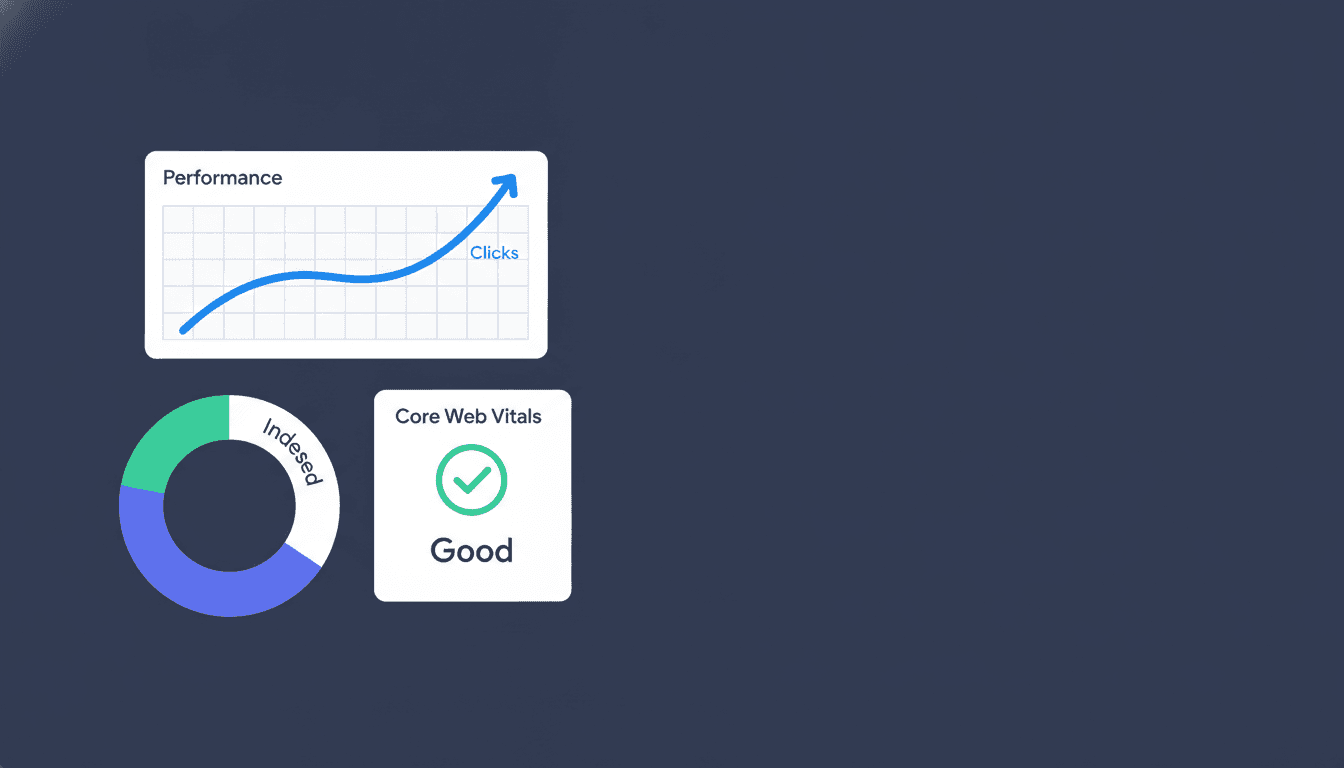
3. Check Core Web Vitals. Google's Core Web Vitals measure Largest Contentful Paint (LCP), Interaction to Next Paint (INP), and Cumulative Layout Shift (CLS). Research from the Web Vitals team demonstrates that pages meeting Core Web Vitals thresholds see measurably lower bounce rates and higher conversion rates. The PageSpeed Insights API gives URL-level field data. Flag any page with LCP above 2.5 seconds or CLS above 0.1 as a priority fix.
4. Test mobile usability. Google indexes mobile-first. Run the Mobile Usability report in Search Console and the Mobile-Friendly Test on any template that surfaces errors. Tap targets, font sizes, and viewport configuration are the most common failures.
5. Audit redirects and internal links. Chain redirects (301 pointing to another 301) bleed link equity and slow crawl. Find them in your crawl export. Equally important: check for pages with zero internal links pointing to them. Orphaned pages receive no crawl priority regardless of their content quality.
6. Verify HTTPS and security. Mixed-content warnings (HTTP assets loading on HTTPS pages) erode trust signals. Your crawl tool will flag these. Also check that your robots.txt is not accidentally blocking critical paths.
The full seo audit checklist for the technical layer takes roughly four to eight hours on a site with under 10,000 pages, depending on the depth of crawl configuration.
Content SEO Audit: Finding What's Holding Back Your Rankings
A content SEO audit asks: does what we have published deserve to rank, and is it earning the traffic it theoretically could? Two problems dominate most sites: content that has decayed (it ranked, then stopped) and content that never ranked because it lacks depth, entity coverage, or clear search intent alignment.
Start with a content inventory. Pull every indexed URL, its organic traffic (90-day window from Search Console or an analytics integration), and its primary ranking keyword. Segment into four buckets:
- Protect: Ranking in positions 1-5, driving meaningful traffic. Leave these alone unless a competitor is closing the gap.
- Optimize: Ranking 6-20. These pages need entity refinement, better internal linking, or updated supporting data. This is your highest-ROI bucket.
- Consolidate: Multiple pages targeting the same keyword, cannibalizing each other. Pick the strongest, redirect or redirect-and-merge the others.
- Remove or rewrite: Zero traffic over 12 months, no backlinks, no strategic value. Thin content drags overall site quality scores.
The Project Rankup guide to AI content audit tools covers how AI-assisted tools can accelerate this triage, especially for sites with thousands of URLs.
For the pages you decide to optimize, do not just add words. Map the page to a specific search intent (informational, commercial, transactional, navigational), compare your entity coverage against the top three ranking pages for that keyword, and address what you are missing. Content length is a byproduct of thoroughness, not a target.
With AI Overviews now appearing for a large share of informational queries, content that answers questions in self-contained paragraphs earns citations in AI-generated results, not just blue-link clicks. Our guide to ranking in Google AI Overviews covers the structural patterns that get extracted. Write for that structure and you rank in both traditional and AI-mediated search.
The Backlink Audit Process and Local SEO Audit Steps
Backlink Audit Process
A backlink audit separates your link profile into assets (links that transfer genuine authority), neutral links (indexed but low-impact), and liabilities (spammy, irrelevant, or manipulative links that could trigger a manual action). The backlink audit process has three core steps.
First, export your full link profile from at least two sources. Ahrefs and Google Search Console export different subsets of links. Use both. Second, filter for potentially harmful patterns: links from sites with no organic traffic, exact-match anchor text clusters, links from link farms, or foreign-language links that have no logical connection to your niche. Third, make a disavow decision. Google has repeatedly stated that most low-quality links are ignored rather than penalized, but if your site has a history of manipulative link building, a targeted disavow file submitted through Search Console is appropriate.
On the acquisition side, look at which content types have earned the most links. Replicate those. Data-backed content, original research, and free tools attract links consistently across industries. Pew Research Center studies and Statista reports consistently rank among the most-cited sources, demonstrating that authoritative, primary-source content earns sustainable link velocity.
Local SEO Audit Steps
For any business with a physical location or a service area, local signals are a separate audit layer. The local SEO audit steps that most agencies skip:
- Verify your Google Business Profile is claimed, fully populated, and has a primary category that matches what you actually do.
- Check NAP (Name, Address, Phone) consistency across your top 20 citation sources. A single address format discrepancy across directories is enough to suppress local pack rankings.
- Audit review recency and response rate. Google's local algorithm weights recent reviews and owner engagement.
- Inspect your website's local landing pages for city-level keyword coverage, embedded maps, and structured data (LocalBusiness schema).
Local audits often take less than two hours and can produce ranking improvements within weeks. They are consistently undervalued by agencies focused on national campaigns.
Best SEO Audit Tools 2026
No single seo audit tool covers every pillar. The most effective setups combine a crawler, a rank tracker, a backlink database, and Search Console.
| Tool | Best For | Standout Feature |
|---|---|---|
| Screaming Frog SEO Spider | Technical crawl | On-page data at scale, JavaScript rendering |
| Ahrefs Site Audit | Combined technical + backlinks | Crawl health score + link profile in one dashboard |
| Google Search Console | Index coverage + Core Web Vitals | Direct data from Google, free |
| Semrush Site Audit | Agency reporting | White-label reports, client sharing |
| Sitebulb | Technical depth | Visual crawl maps, JavaScript audit |
For a free seo audit starting point, Search Console plus PageSpeed Insights covers the two highest-impact technical layers at zero cost. Paid seo audit tools add scale, automation, and backlink data that the free stack cannot match.
If you are working across multiple client sites, the advanced SEO tools roundup on Project Rankup breaks down which platforms deliver the best return for agency workflows, including newer AI-assisted options that are changing how crawls are interpreted.
For keyword gap analysis inside an audit, AI keyword research tools have become faster and more accurate than manual research for identifying content opportunities your site is not yet targeting.
How to Write an SEO Audit Report That Gets Implemented
A detailed finding no one acts on is wasted work. The SEO audit report template that actually drives implementation has three sections, in this order: executive summary, prioritized issue list, and supporting evidence.
Executive summary (one page maximum). State the overall health score, the three highest-impact issues, and the projected traffic outcome of fixing them. Decision-makers read this section. Make it outcome-focused, not process-focused. "Fixing 47 redirect chains and resolving index bloat is projected to increase crawl efficiency and recover approximately 12% of suppressed pages" lands better than "we found redirect errors."
Prioritized issue list. Rank every finding by a simple impact-versus-effort matrix. High impact, low effort items (a missing sitemap, a misconfigured robots.txt block on a key section) go first. Low impact, high effort items (redesigning URL structures across 5,000 pages) go last or get deprioritized entirely unless the site has a specific reason. Each finding gets: the issue, the affected URLs or count, the fix, the owner, and the deadline.
Supporting evidence. Screenshots, crawl exports, Search Console data. This section is for developers and implementers, not for the initial pitch.
A seo audit report template structured this way gets acted on because it removes ambiguity. The implementer does not have to interpret findings. They execute the list.
For SaaS companies and startups managing SEO in-house, pairing this report format with the guidance in the digital marketing for SaaS post gives a useful framework for integrating audit cycles into quarterly planning.
Frequently asked questions
What is an SEO audit?
An SEO audit is a comprehensive analysis of a website's technical infrastructure, content quality, backlink profile, and user experience signals to identify why it is not ranking as well as it should. The output is a prioritized list of fixes mapped to specific ranking factors. Audits range from quick one-hour checks to multi-week engagements for enterprise sites.
How often should you do an SEO audit?
Most sites benefit from a full SEO audit every six months, with lightweight monthly checks covering Core Web Vitals, index coverage, and new crawl errors. After a major site migration, a CMS change, or a Google algorithm update, run a focused audit immediately. Waiting a full cycle after a significant change is one of the most expensive mistakes in SEO.
How to do seo audit for a website without an agency?
Start with Google Search Console (free, direct from Google) to review index coverage and Core Web Vitals. Run a crawl with Screaming Frog's free tier (up to 500 URLs). Audit your top 20 pages in PageSpeed Insights. Export your backlink profile from Ahrefs Webmaster Tools (free for site owners). Work through each pillar systematically: technical first, then content, then links.
How to make seo audit report that stakeholders will read?
Lead with outcomes, not observations. Open with a one-page executive summary stating the three highest-impact issues and what fixing them is projected to achieve. Follow with a prioritized issue list using an impact-versus-effort matrix. Put raw data, screenshots, and crawl exports in an appendix. Stakeholders act on clear priorities; they ignore exhaustive lists with no triage.
What is the difference between a free seo audit and a paid one?
A free seo audit typically covers surface-level technical checks using automated tools, often used as a lead-generation tool by agencies. A paid, professional audit adds manual review of content quality, in-depth backlink analysis, competitor gap assessment, and a prioritized remediation plan with business context. For sites with real traffic at stake, the manual layer is where the value lives.
Key Takeaways
- An SEO audit spans five pillars: technical, content, backlinks, user experience, and local. Addressing only one rarely moves rankings.
- The single most overlooked report in Search Console is "Crawled - currently not indexed." It identifies pages Google reached but chose to ignore.
- Content triage (protect, optimize, consolidate, remove) delivers faster ROI than publishing new content on a site with indexation problems.
- Backlink audits should use at least two data sources. Ahrefs and Search Console surface different link subsets.
- The seo audit report template that gets implemented leads with outcomes, uses an impact-versus-effort matrix, and assigns owners to every fix.
- Run a full audit every six months and a lightweight check monthly. After any major site change, audit immediately.
- Free seo audit tools (Search Console, PageSpeed Insights, Screaming Frog's free tier) cover the highest-impact technical checks at no cost.
Ready to move faster? Project Rankup's consulting and content audit services help agencies, SaaS teams, and e-commerce brands turn audit findings into ranked pages, without the implementation bottleneck that stalls most SEO programs.