SEO content writing is writing a web page so that it answers what people type into a search engine, in a form Google can understand and readers trust. The writer works out what the searcher needs, researches it properly, structures the page so the answer is easy to find, and handles the on-page details: title, headings, links and sources. It is ordinary good writing with one extra discipline: starting from the query instead of the idea.
That last part is the craft, and it can be learned. This guide is for writers and freelancers who want to do it well: what the job involves, the skills editors look for, how to practise without clients, what a portfolio should prove, and what AI has changed.
What is SEO content writing?
Most writing starts with something the writer wants to say. SEO writing starts with something a stranger wants to know. The searcher has already told you, in a few words, what they need. Your job is to read that query correctly and write the page that satisfies it better than the pages already ranking.
So the "SEO" part is less about tricks and more about attention. Who types "gst registration online"? A shop owner in Jaipur who has just crossed the turnover threshold and wants the steps and the documents, not a history of indirect tax in India. Get that reading right and most of the SEO follows: the headings, the length, the examples, even the title.
The output is usually a blog post, guide, glossary entry or landing page. The same skill applies to all of them.
How is SEO writing different from copywriting?
The two overlap, and many freelancers do both. They differ in what the reader is doing when they arrive and in how the work is measured.
| SEO content writing | Copywriting | Journalism | |
|---|---|---|---|
| Reader arrives | Searching for an answer | Shown an ad, email or sales page | Following the news or a publication |
| Main job | Answer the query fully | Persuade them to act | Report what happened |
| Success looks like | Ranks, gets clicks, gets read | Conversions | Readership, impact |
| Lifespan | Months or years, with updates | A campaign | Days, mostly |
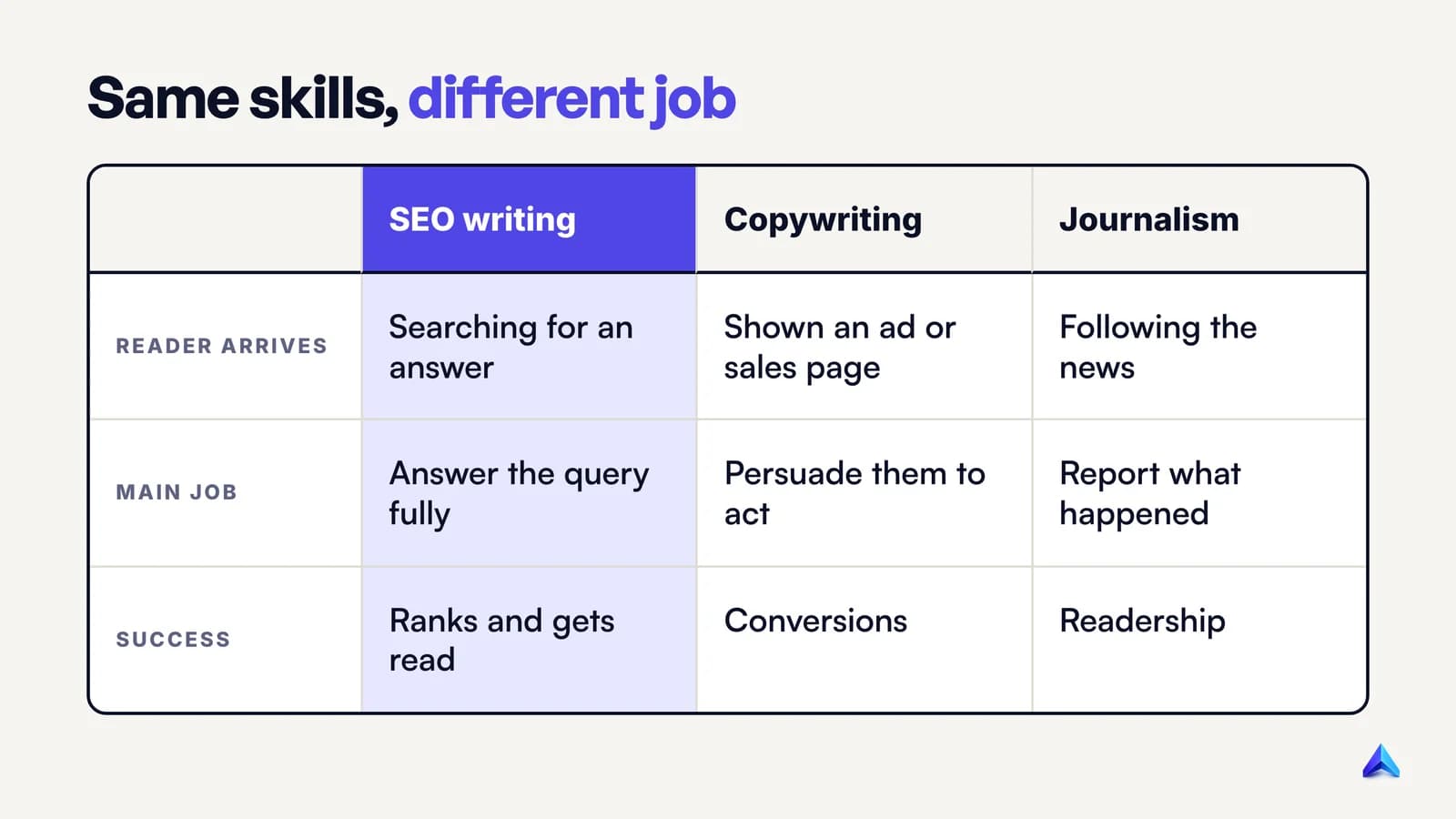
The practical difference shows up in the first paragraph. A copywriter can open with a hook and build curiosity, because the reader is already on the page. An SEO writer cannot. The reader came from a results page with a question, and if the answer is not near the top they go back and click the next result.
People also ask about "SEO copywriting". In practice the term is used loosely for both jobs. When a client says it, ask whether they want a page that ranks for a question or a page that sells a service. The brief changes completely.
What does an SEO content writer actually do?
On a typical assignment, an SEO writer receives a keyword or a brief, reads the current search results, researches the topic, drafts, adds the on-page elements, and revises after an editor's notes. The full sequence for a single article is in our guide to writing a blog post for SEO, so we will not repeat it here.
What matters for your career is knowing where the writer's job ends. On most teams the split looks like this:
- Usually the SEO lead's call: which keyword to target, whether the site can realistically rank for it, the URL, the internal linking plan, and anything technical such as schema or redirects.
- Usually the writer's call: how to read the searcher's intent, the outline, the research, the sources, the examples, the voice, and the title and meta description drafts.
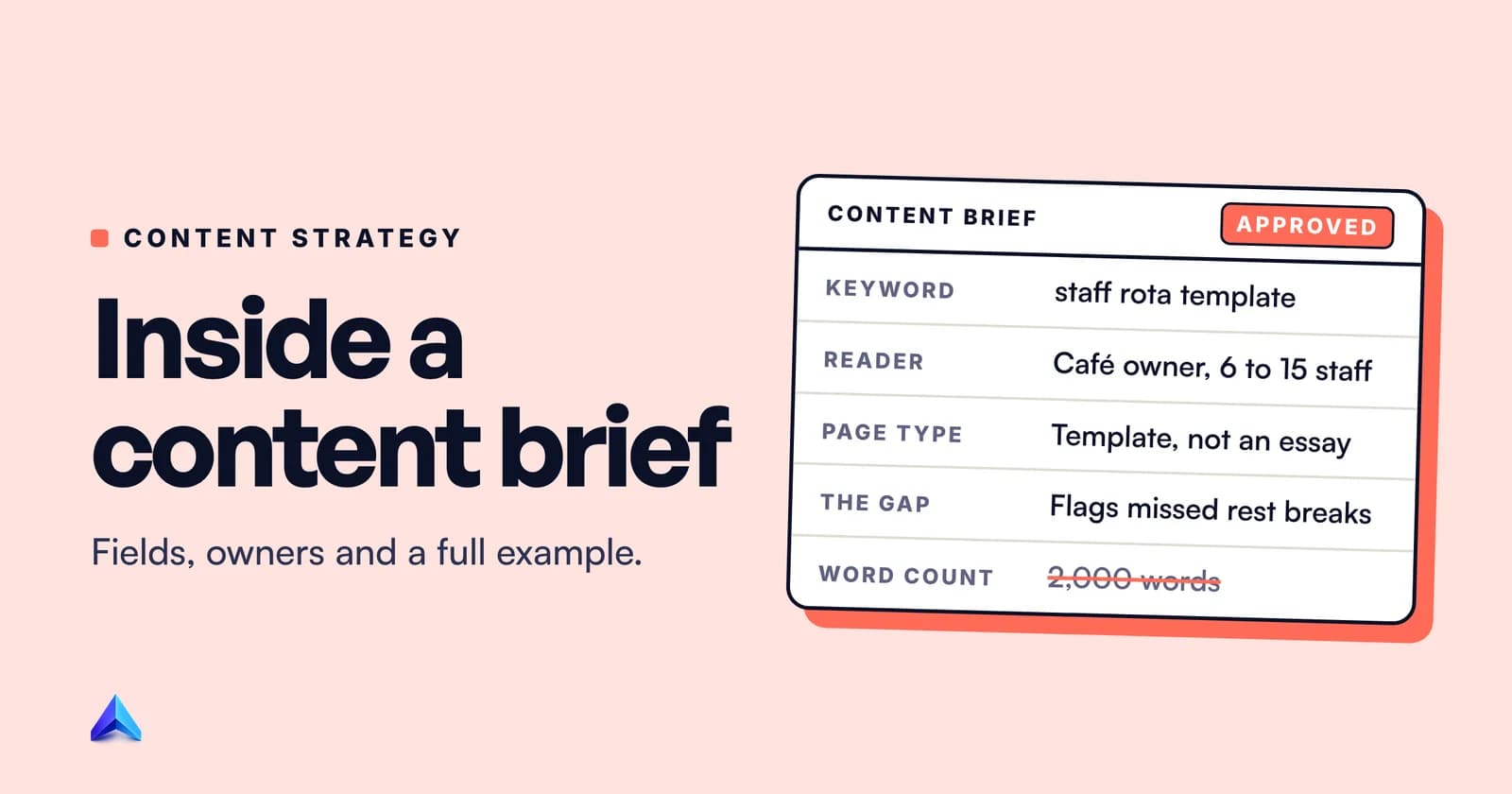
- Shared: the brief. A good content brief settles the decisions so the writer can spend their time writing.
Freelancers working directly with small businesses often own both sides. That is fine, but be honest about it in your proposal. "I write and optimise the article" and "I run your SEO" are different promises.
Which skills make someone good at it?
Six skills separate a competent SEO writer from a great one. None of them is a secret, and all of them improve with deliberate practice.
Reading search intent
Before writing a word, search the keyword and look at what Google already shows. Are the top results guides, product pages, tools or videos? Are they for beginners or specialists? The results page is the best evidence you have of what Google thinks searchers want. If every result is a step-by-step guide and you write an opinion piece, you are arguing with the evidence.
Using the words readers use
Experts and beginners describe the same thing differently. Google's SEO starter guide gives the example that some people search for "charcuterie" while others search for "cheese board". The UK government's writing standards make the same point with "heavy goods vehicle" and "lorry", and tell writers to check which term people actually search for. Write in your reader's vocabulary, then explain the technical term once if they will need it.
Research and sourcing
An SEO article makes claims, and each claim needs a source the reader could check. That means the original study, the official documentation or the government page, not a blog that summarised it. The US Bureau of Labor Statistics puts it plainly: writers establish credibility with editors and readers "through clean prose, strong research, and the use of sources and citations." Keep a simple log as you research: the claim, the exact sentence that supports it, the link and the date.
Structure for scanning
People scan web pages before they decide to read them. The Nielsen Norman Group's eyetracking research on scanning patterns found the F-shaped scanning pattern still holds on desktop and mobile, and it also describes a "layer-cake" pattern where readers jump from heading to heading and skip the text in between. Its advice is specific: put the most important points in the first two paragraphs, and start headings with the words that carry the information.
That is why good SEO headings read like the questions people ask, and why each section should open with its answer.
Plain language
Short words, short sentences, active voice. GOV.UK's guidance on clear language suggests splitting sentences over 25 words and keeping paragraphs to five sentences or fewer. It also cites research on legal documents in which 80% of people preferred sentences in clear English, with the preference growing as the issue got more complex. Specialists skim too.
On-page elements
These are the parts of the page search engines read closely and that the writer usually drafts:
- Title tag. Says what the page is, with the main term near the start.
- Meta description. A plain one-sentence promise of what the page gives.
- Headings. One H1, then H2s and H3s that make sense on their own.
- Internal links. Descriptive anchor text pointing to related pages on the same site.
- Image alt text. A short description of what the image shows.
Our older on-page SEO checklist covers each element in detail.
How should you handle keywords now?
Use the main phrase where it fits naturally: in the title, near the start, in a heading or two. Then stop counting. Write the rest of the page in normal language, including the variations a person would use.
Some guides still teach the opposite. One long-running guide that ranks for this keyword tells writers to use keyword phrases exactly as given, and to wedge awkward phrases like "divorce lawyers Springfield" into sentences by breaking them with commas or full stops. That advice is out of date. Google's starter guide says its language matching systems "can understand how your page relates to many queries, even if you don't explicitly use the exact terms in them."
Pushing it further is a policy problem. Google's spam policies define keyword stuffing as filling a page with keywords "in an attempt to manipulate rankings", and one of its examples is simply "repeating the same words or phrases so often that it sounds unnatural."
A worked example
Say the brief asks for "gst registration online" in a guide for small Indian businesses. A stuffed opening reads like this:
Looking for GST registration online? Our GST registration online guide explains GST registration online for businesses that need GST registration online in India.
The keyword appears four times and the reader learns nothing. A rewrite answers the question in the first lines:
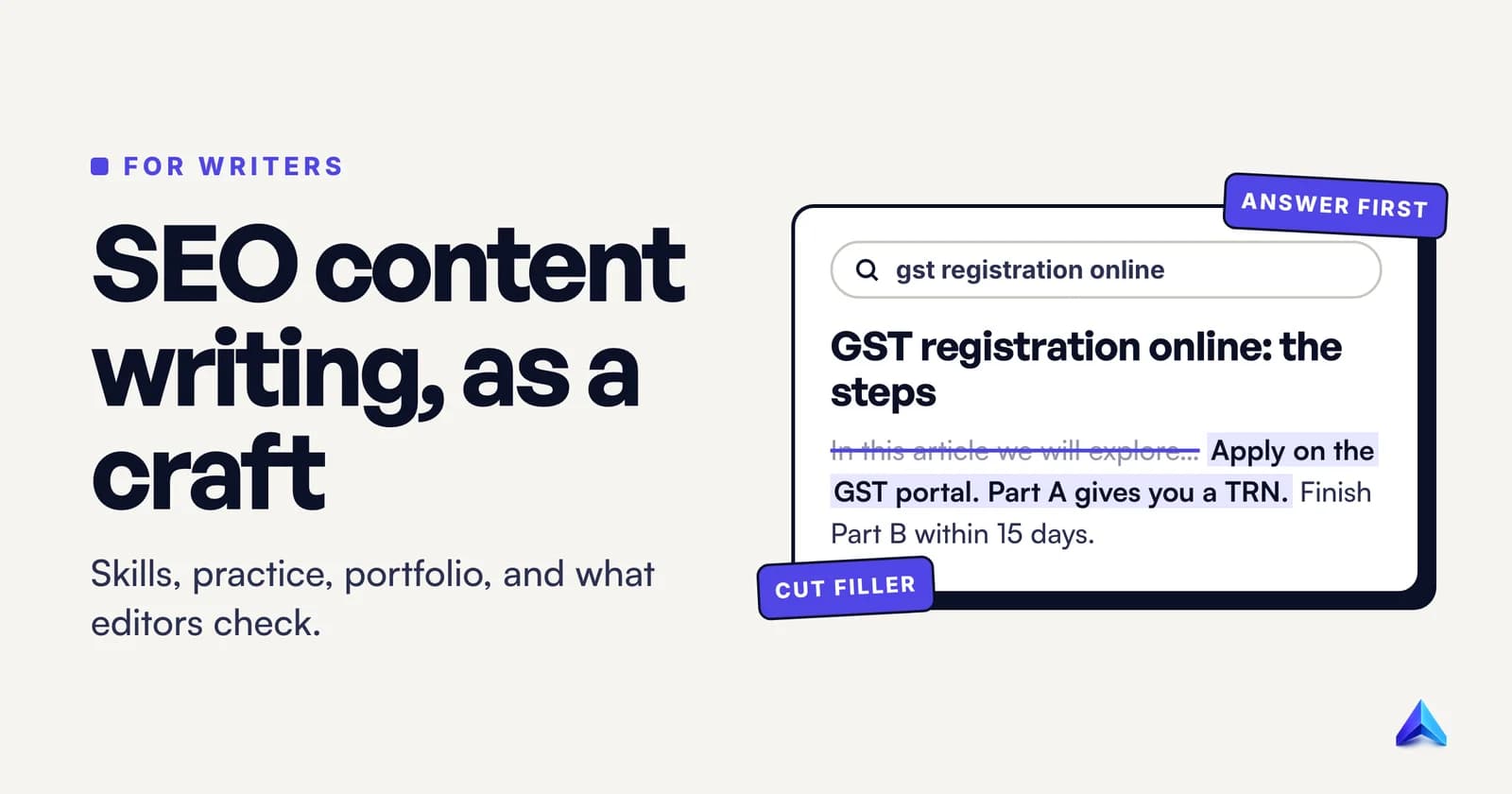
You can apply for GST registration yourself on the GST portal. Part A asks for your business PAN, email and mobile number and gives you a Temporary Reference Number (TRN). You then have 15 days to finish Part B before the draft is deleted. This guide covers what each tab asks for and what to keep ready.
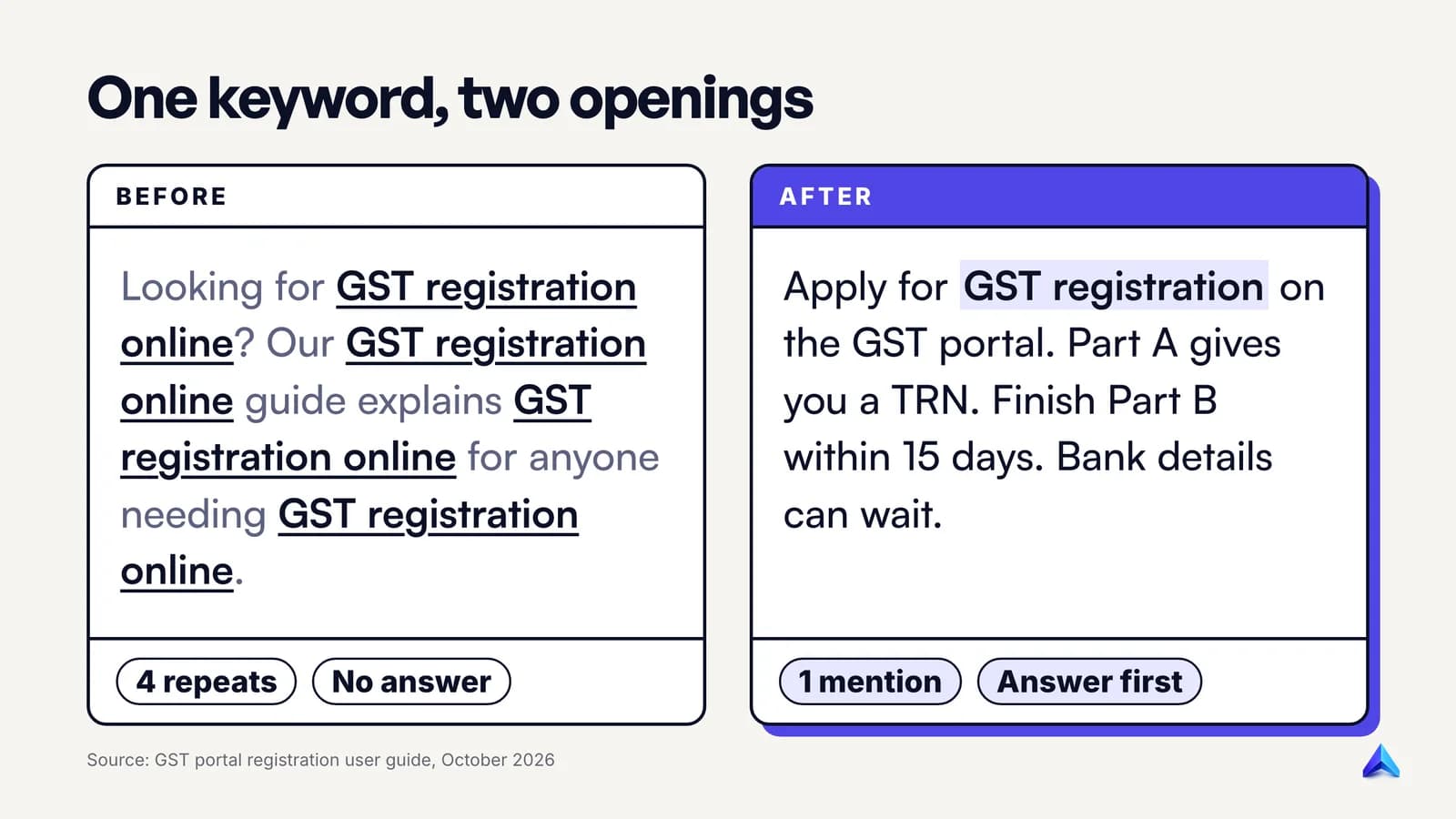
The phrase appears once, naturally, and the reader gets a usable answer in three sentences. Look at where the difference came from. The stuffed version needed no research at all. The useful one needed the GST portal's own registration user guide open on the desk, which is where the 15-day limit comes from, along with a detail worth passing on: bank account details have been optional at the application stage since December 2018.
Good keyword handling is mostly a by-product of good research.
How do editors judge an SEO draft?
A good editor rarely scores a draft on keyword use. They read it the way a sceptical searcher would. If you want to know what will get your work sent back, run these seven checks yourself, in this order, before you submit:
- Does the first paragraph answer the query? If the answer appears in paragraph four, the draft goes back.
- Does it match the intent of the results page? A how-to keyword needs steps. A comparison keyword needs a verdict.
- Is every claim sourced? Numbers, dates and quotes need a link to where they came from.
- Does it add anything? A first-hand example, a clearer explanation, a better table. A rewrite of the top three results adds nothing.
- Can you scan it? Headings that make sense alone, short paragraphs, lists where the material is a list.
- Are the on-page elements done? Title, meta description, internal links, alt text.
- Does it sound like a person? Filler openings, the same sentence shape repeated, and paragraphs that summarise the previous paragraph all get cut.
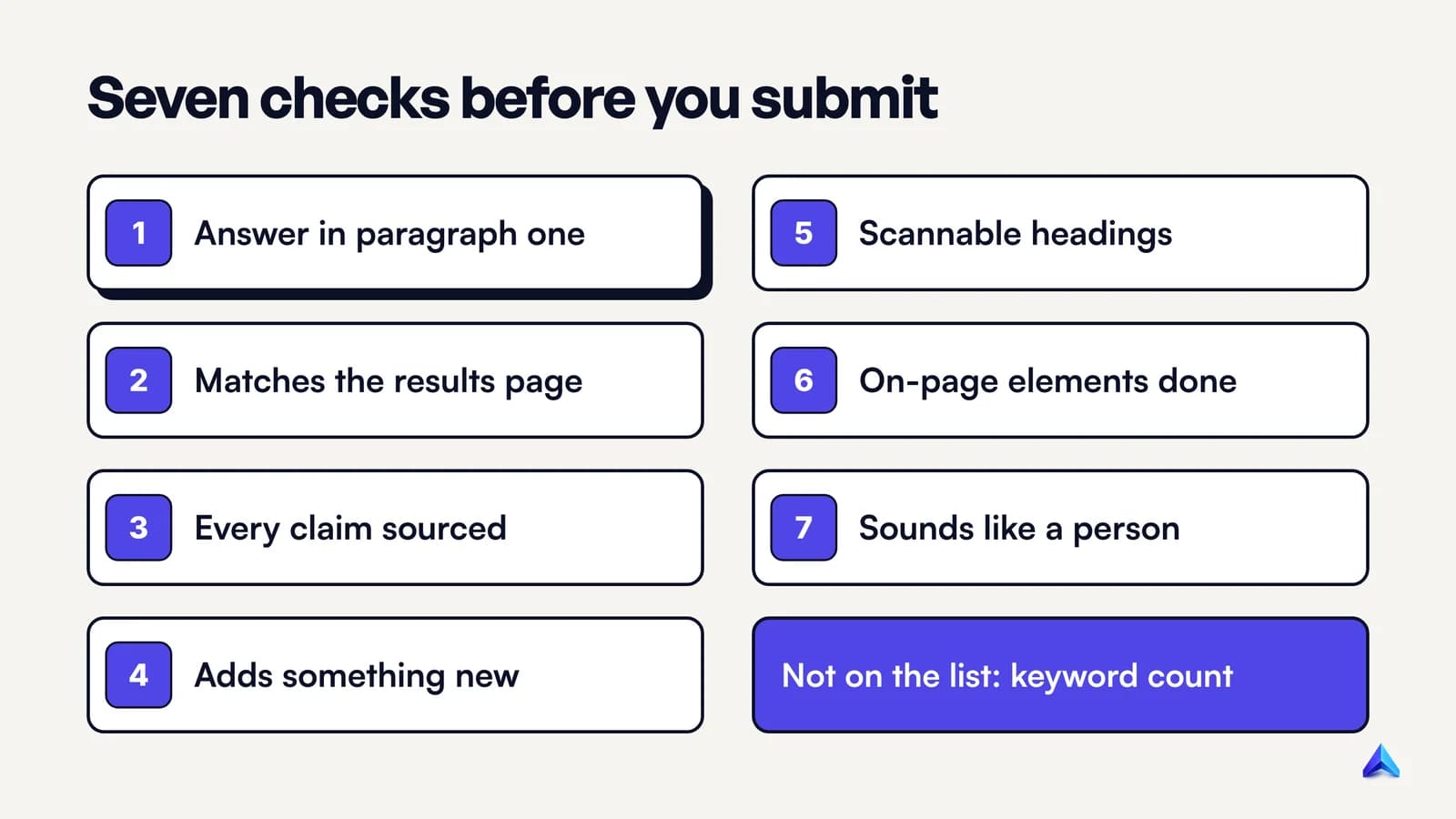
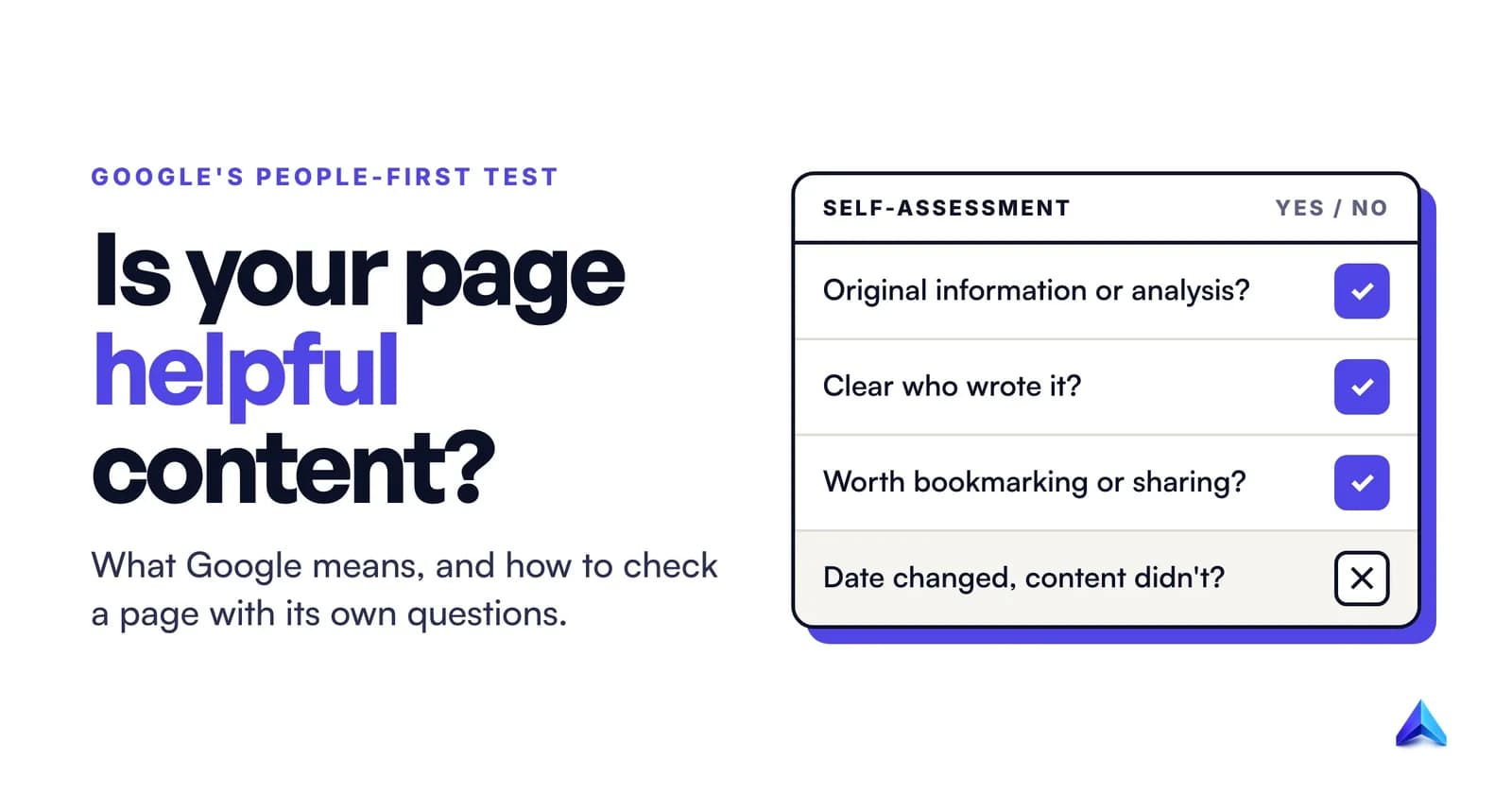
These map closely to what Google asks its own quality raters to look for in main content: effort, originality, talent or skill, and accuracy. Our explainer on helpful content walks through Google's self-assessment questions if you want to run the same checks on your own work.
How do you practise without clients?
You do not need a client to get good. You need a feedback loop. These drills work because each one has a check you can run yourself.
- Read ten results pages a week. Pick queries from a niche you know. For each, write one line on what the searcher wants and why the top result wins. It is the cheapest way to build the intent skill.
- Rewrite introductions. Take a ranking article with a slow opening and rewrite its first 80 words so the answer lands immediately. Compare the two side by side.
- Write to someone else's brief. Ask an SEO friend or a writing group for a real brief, or write one using a public template, then write to it without changing the scope.
- Publish on a site you control. A simple blog on your own domain lets you connect Google Search Console and see the queries each post appears for. Few things teach intent faster than seeing what people actually searched before they landed on your page.
- Edit other people's drafts. Spotting a buried answer in someone else's work trains you to spot it in yours.
If you are also learning SEO itself, our SEO roadmap sets out what to learn first and in what order. Writers can go deep on content and intent and stay shallow on the technical stages for a while.
What should an SEO writing portfolio show?
Most portfolios show finished articles and nothing else. An editor hiring an SEO writer wants to see your thinking, so give them the context they cannot see on the page.
For each sample, include three to five lines above the link:
- The query the piece targets and the region it was written for.
- Your read of the intent, in one sentence.
- What you added that the existing results did not have.
- The result, only if you have real data and permission to share it. A line such as "page 1 for its main query, per the client's Search Console" is strong. A vague "boosted traffic" is worse than saying nothing.
Three or four strong samples beat twelve average ones. Choose a range that shows you can handle a how-to, an explainer and something commercial. Spec pieces are fine if you label them as spec work and publish them somewhere real.
Pick a niche if you can. A writer who knows SaaS onboarding, Indian tax compliance or UK property law can usually charge more and write faster than a generalist, because the research is half done before the brief arrives. Freelancers in India writing for US or UK clients should also show they can write in the client's market, with local spelling, currency and examples.
How is AI changing SEO content writing?
AI tools now produce competent first drafts in seconds, so the part of the job that was mostly typing has shrunk. The parts that need judgement have not.
Google's guidance on using generative AI content, updated on 1 October 2026, is clear on both sides. It says generative AI "can be particularly useful when researching a topic, and to add structure to original content." It also warns that generative models "don't retrieve facts, but predict a likely sequence of words", and that it is "critical to manually factcheck and review all AI-generated content" before publishing, including metadata such as title elements. Publishing many AI pages without adding value is a separate risk, covered in our post on scaled content abuse.
For a working writer, that turns into a clear division of labour:
- Hand to AI: outline options, summarising your own research notes, alternative headings, a rough first pass at a FAQ.
- Keep for yourself: reading intent, choosing sources and checking every fact, first-hand examples, the opening paragraph, and the final edit for voice.
Content tools, including our own Project Rankup, now generate structured drafts with sources and internal links already in place. That raises the floor. It also means the writers who stay in demand are the ones who can verify, add experience and edit, because a client can get the floor without them.
One more warning from Google's own guidance: inventing authors is treated as deception. Fabricated profiles, AI-generated headshots and false credentials make a page untrustworthy. If you ghostwrite, the byline belongs to a real person who reviewed the piece.
Is SEO content writing a good career?
It can be, with clear eyes about the market. There is no official data series for SEO writers specifically, so the closest reliable numbers are for writers in general.
The US Bureau of Labor Statistics' profile of writers and authors gives a median annual wage of $76,910 in May 2025, with the lowest 10% earning under $44,310 and the highest 10% over $139,870. It counts 65% of writers as self-employed. It projects little or no change in employment from 2025 to 2035, and says that "increasing use of artificial intelligence (AI) for writing is projected to dampen demand", while noting that writers "will continue to be needed for online media and advertising."
Those are US figures for a broad category, not a forecast for freelancers in India or the UK. The direction is still useful. Generic writing is getting cheaper. Writers who pair the craft with subject knowledge, sourcing discipline and a track record they can show will keep finding work, and the ones who only produce word count will feel the squeeze first.
Frequently asked questions
Is SEO writing hard to learn?
In our view, the basics take a few weeks: reading intent, structuring a page, writing titles and meta descriptions. Getting good takes longer, because it depends on research habits and editing judgement that only come with practice and feedback. If you already write clearly, you are most of the way there.
Do you need paid SEO tools to start?
No. You can read search results in Google itself, see related questions in the "People also ask" box, and check your own pages in Google Search Console for free. Paid tools help with keyword volumes and competitor data, which matter more to the person choosing keywords than to the writer.
What keyword density should I use?
None. Google publishes no density target, and its spam policies treat repetition that sounds unnatural as keyword stuffing. Put the main phrase in the title and early in the page, use natural variations elsewhere, and read the draft aloud. If a sentence only exists to repeat the keyword, cut it.
How long should an SEO article be?
As long as it takes to answer the query fully. Google says it has no preferred word count. The practical method is to look at the length of the pages already ranking and cover what the searcher needs; our guide on how long a blog post should be shows how to size one.
Is SEO writing the same as blogging?
Not quite. Blogging is a format, and a blog post can be a personal essay or company news with no search demand at all. SEO writing is a method: starting from what people search for. Most SEO writing is published as blog posts, but so are many posts that were never meant to rank.
Can I get SEO writing work without experience?
Yes, if your samples do the convincing. Publish three or four pieces on your own site that each target a real query, add a short note on the intent and what you added, and pitch businesses in a niche you understand. A clear sample beats a long CV.