Keyword research in 2026 means finding high-intent phrases, grouping them into topic clusters, and shaping each page into the formats AI engines quote: direct answers, lists and tables. Start with a free keyword planner for volume, add Search Console and one paid tool for difficulty, then check the live SERP for AI Overviews before you write. Intent and answer format now decide who ranks and who gets cited.
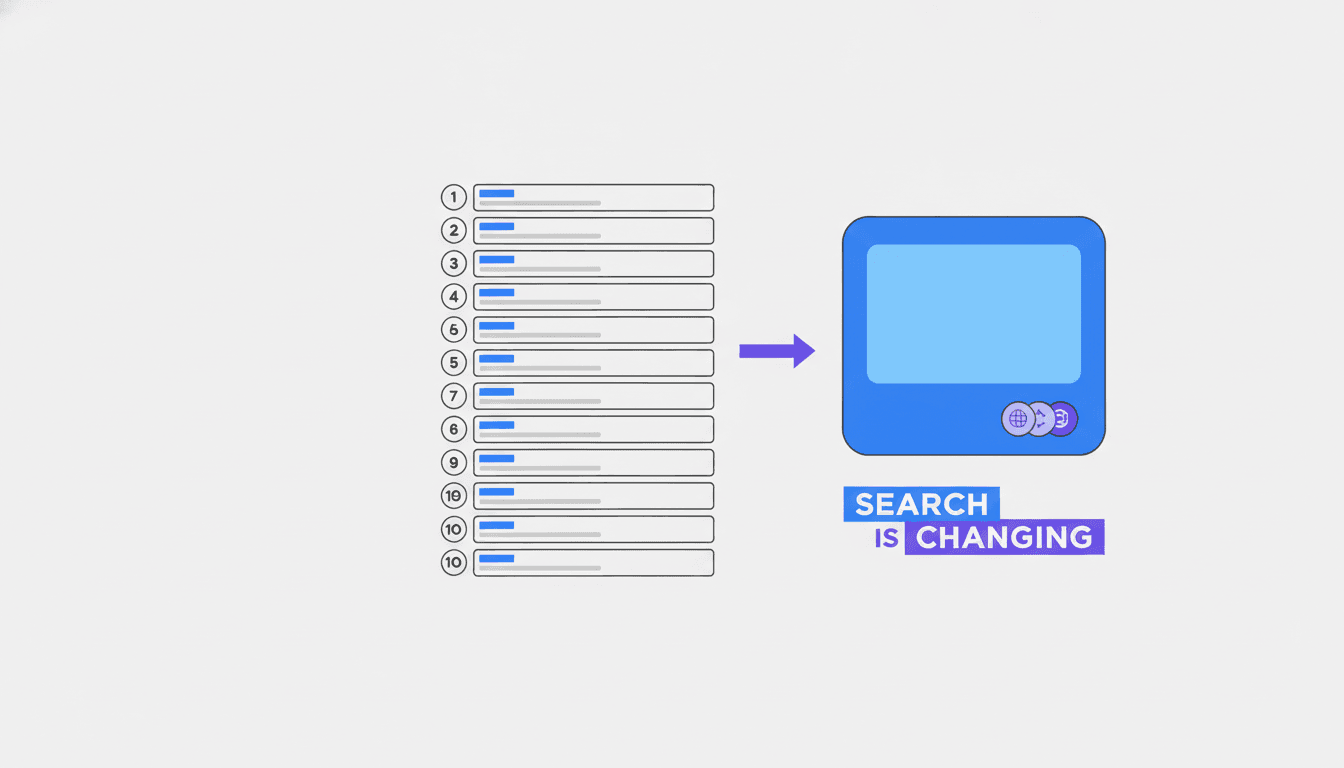
The old definition still holds. You find the words your buyers type, then build pages that match them. What changed is the target. You are no longer writing only for ten blue links. You are writing passages that AI Overviews, ChatGPT and Perplexity can lift and cite. This guide covers the full workflow, a scoring matrix with a worked example, a tool map by role, and the settings that matter for brands selling in India.
The 2026 Keyword Research Workflow in One Table
Use this table as a checklist. Each row is one stage, and each stage feeds the next.
| Stage | What you do | Main tools | Output |
|---|---|---|---|
| 1. Seeds | List 10 to 20 phrases your buyers use | Support tickets, sales calls, G2 reviews | Seed list |
| 2. Expand | Grow seeds into hundreds of related terms | Google Keyword Planner, Semrush, Ahrefs | Raw keyword list |
| 3. Filter by intent | Sort terms into four intent buckets | Manual review, SERP checks | Intent-tagged list |
| 4. Score | Weight volume, difficulty, intent and AI potential | Spreadsheet | Ranked shortlist |
| 5. Validate | Check the live SERP and AI answers | Incognito search, ChatGPT, Perplexity | Go or no-go per term |
| 6. Cluster | Group terms into pillar and cluster pages | Spreadsheet or SEO platform | Content map |
Most broken keyword plans fail at stage 3 or 5. Teams pull a big list, sort by volume and start writing. Spend your time on intent and validation, and the other stages get cheap.
What Is Keyword Research and Why Does It Still Matter?
Keyword research finds the exact language your audience uses when they look for what you sell. It tells you which topics have real demand, how hard each one is to win, and what kind of page searchers expect when they land. Without it, you write for yourself and hope someone else cares.
The stakes went up. SparkToro research published on June 9, 2026 found that 68.01% of Google searches in the US ended without a click in the first four months of 2026. AI answers at the top of the page soak up the visit before anyone scrolls. If your page is not the source those answers draw from, you lose twice: no click and no citation.
Rushed research tends to fail in three ways. Teams chase broad, high-volume terms they can't rank for. They skip long-tail phrases where intent is clearest. And they miss the question queries that AI Overviews pull from most. A sound process blocks all three.
The Full Keyword Research Workflow: Seed to Validated List
This is the step-by-step process that takes you from a blank sheet to a ranked list ready for writers. Skip a step and the error grows in the next one.
Step 1: Generate Seed Keywords
Start with the core terms that describe what your brand does. For an SEO agency, seeds might be "keyword research", "content audit" or "technical SEO". For a D2C skincare brand in India, they might be "vitamin c serum", "sunscreen for oily skin" and "niacinamide serum price".
Don't overthink it. Ten to twenty seeds are enough. Think like your buyer, not like a search marketer.
The best seeds come from raw customer words: support tickets, sales call notes, G2 and Capterra reviews, Amazon review threads and onboarding calls. These phrases skip the jargon filter. A buyer says "why is my site not on Google", not "indexation issues".
Step 2: Expand With Tools
Feed your seeds into a keyword tool to get hundreds of related terms. Google pitches its Keyword Planner as a free tool for finding campaign keyword ideas along with search volume (Google). Its numbers come from Google's own ad data, which is why it stays in the stack even when you pay for something else. Pair it with Semrush or Ahrefs for difficulty scores and SERP feature data.
For AI search, add one more layer. Paste your seeds into ChatGPT or Perplexity and ask what questions people usually have about each one. The phrasing those tools return mirrors what AI engines already field, and that is where your AEO chances sit. Our guide to AI keyword research covers prompt patterns for this in more depth.
Step 3: Filter by Intent
Volume means little if the intent is wrong. Sort your list into four buckets:
- Informational: "how to do keyword research", "what is search volume"
- Navigational: "Ahrefs keyword explorer", "Google Search Console login"
- Commercial: "best keyword research tools", "keyword research tool free"
- Transactional: "buy Semrush subscription", "SEO agency pricing in Bangalore"
For SaaS brands and content-led companies, informational and commercial terms drive the most organic traffic and AI citations. Transactional terms convert better but earn fewer AI Overview spots. Decide which bucket a page serves before anyone writes a word.
Step 4: Score and Prioritize
You can rank for plenty of keywords that aren't worth the effort. Score each term from 1 to 5 on four criteria, then multiply by the weight.
| Criterion | Weight | What a 5 looks like |
|---|---|---|
| Search volume | 25% | Steady demand for your market (low numbers are fine for long-tail) |
| Keyword difficulty | 25% | Top results come from sites at or below your authority |
| Intent match | 30% | SERP shows the page type you can build well |
| AI citation potential | 20% | Question format, narrow scope, factual answer |
Intent carries the most weight for a reason. A term with modest volume and a perfect intent fit beats a big term where the SERP is full of formats you can't match, like a product grid when you only have a blog.
Step 5: Validate With SERP and AI Analysis
Before you commit, search each priority term in an incognito window. Check three things. Does Google show an AI Overview? What format wins: listicle, how-to or comparison table? Is there a People Also Ask box?
Then ask the same question in ChatGPT and Perplexity and note which domains get cited. If the top ten are all huge domains and Google already shows a full AI answer, you need a much sharper angle or a different keyword. Our walkthrough on how to rank in Google AI Overviews shows what the cited pages tend to share.
A Worked Example: Scoring Three Keywords
To make the matrix concrete, take an illustrative case: an Indian SaaS startup selling GST billing software, with a young domain. The team shortlists three terms after expansion. Scores are on a 1 to 5 scale.
| Keyword | Volume (25%) | Difficulty (25%) | Intent (30%) | AI potential (20%) | Weighted score |
|---|---|---|---|---|---|
| billing software | 5 | 1 | 2 | 1 | 2.30 |
| gst invoice format in excel | 3 | 4 | 3 | 3 | 3.25 |
| how to create e-invoice under gst | 2 | 4 | 5 | 5 | 4.00 |
The head term looks tempting because of its volume. But the SERP is packed with big brands and comparison sites, and the intent splits between "free tool", "download" and "buy". The question term scores highest. It has a clear, factual answer, a how-to format the team can write well, and strong odds of an AI Overview citation.
Use this decision rule. Terms scoring 3.5 or higher go into this quarter's plan. Terms between 2.5 and 3.5 go to the backlog. Anything under 2.5 gets parked or assigned to a product page you'll push once the site has more authority.
How to Use Google Keyword Planner Without Getting Misled
Google Keyword Planner is free, but you need a Google Ads account to sign in. You don't need a live campaign. It gives you keyword ideas and volume trends straight from Google's ad system, which makes it the best free source for demand checks. Treat its competition column with care: it measures advertiser bidding, not organic difficulty.
Discover New Keywords vs Get Search Volume and Forecasts
Google's help docs split the tool into two modes: "Discover new keywords" and "Get search volume and forecasts" (Google Ads Help). Use the first in Step 2 to widen your list. You can start from words or from a site URL, which works well for peeking at a rival's page.
Use the second mode in Step 4. Paste your shortlist and pull monthly trends for the past 12 months. That view shows you seasonal spikes a single average hides.
Settings That Change Your Numbers in India
Default settings skew results. Change these before you trust any figure:
- Location: Set India, or narrow to cities like Mumbai, Delhi or Bengaluru for local service brands. A plumbing firm in Pune has no use for national volume.
- Language: English alone misses Hindi and Hinglish queries. Run a second pass with Hindi selected for consumer products.
- Date range: Pull 12 months, not the last month. E-commerce terms swing hard around Diwali, Big Billion Days and wedding season.
- Search networks: Keep it on Google only, not search partners, for cleaner SEO signals.
One more trap. The "Competition" column reads "High" when many advertisers bid. That tells you about ad spend, not about how hard the organic SERP is. A term can be "High" here and wide open for a well-built blog post.
Add Microsoft's Keyword Planner for Bing and Copilot Reach
Google is not the only source. Microsoft offers its own Keyword Planner with performance insights for Microsoft Advertising (Microsoft Advertising). Bing's index feeds Microsoft Copilot, so Bing demand data gives you a second view of what people ask in AI-assisted search.
For B2B SaaS, it often surfaces desktop-heavy, work-hour queries that look small in Google. Run your top 20 terms through both. If a term shows up strong in both planners, raise its intent score by a point.
How to Find User Intent for AI Answers
AI engines don't rank pages. They extract passages. That shift changes what good targeting means, so intent mapping for AI answers now sits inside the keyword workflow, not after it.
Three signals separate keywords with AI citation potential from those without:
- Question format: Queries that start with "how", "what", "why", "when" and "which" pull AI summaries far more often than head terms. Pew Research Center found that 60% of Google searches that began with question words such as "who", "what", "when" or "why" produced an AI summary (searches made in March 2025, published July 22, 2025).
- Specificity: "keyword research for content clusters" gets cited more than "keyword research" because the answer is narrow enough to lift cleanly. Broad terms produce blended answers from many sources, so no single page wins much.
- Factual answerability: If the query has a direct, defensible answer (a process, a definition, a comparison), AI engines prefer it. Opinion-heavy or vague terms get passed over.
Map each keyword against these signals and you end up with two lists: one for classic rankings and one for AI citations. They overlap a lot, but not fully. Build for both, and flag terms that sit on both lists as top priority.
Search Volume vs Keyword Difficulty vs AI Citation Potential
People often blur these metrics together. They measure different things, and reading one as another leads to bad picks. This table sets out what each one tells you and when to distrust it.
| Metric | What it measures | Why it matters | Red flag |
|---|---|---|---|
| Search volume | How often people search a term each month | Shows demand exists | Planner shows a wide range, or volume is driven by one seasonal spike |
| Keyword difficulty | How strong the pages ranking today are | Shows effort and time to rank | Score is low but the top five are all government or marketplace sites |
| Intent | What the searcher wants to get done | Decides page type and conversion odds | SERP mixes guides, product pages and tools for the same query |
| AI citation potential | How likely an AI engine is to quote a passage | Decides visibility in zero-click results | Query is opinion-led or too broad for one clean answer |
| Ad competition | How many advertisers bid on the term | Hints at commercial value | Treated as organic difficulty (it is not) |
Difficulty scores also vary by tool, since each vendor builds its own model. Our explainer on what keyword difficulty means breaks down why the same term can read 30 in one tool and 55 in another.
Read the table right to left when you're short on time. Check intent and AI potential first, because they rule a term in or out. Volume and difficulty then set the order.
Semantic Keyword Grouping Techniques That AI Engines Reward
Semantic grouping puts related terms into topic clusters, so one page covers a subject fully instead of chasing one phrase and ignoring fifteen close ones. AI engines reward this because full, well-structured pages give them more clean passages to quote.
The method is simple. Take your filtered list and group it by parent topic. Each term in a group should be answerable on one page without bloat. For example:
Cluster: Keyword research method
- "how to do keyword research"
- "keyword research for SEO"
- "keyword research workflow"
- "how to find seed keywords"
Cluster: Keyword research tools
- "keyword research tool"
- "free keyword research tool"
- "google keyword planner for seo"
- "keyword research tools comparison"
Each cluster becomes one article or one hub page. Internal links between clusters signal topical authority to Google and AI crawlers alike.
A quick test for grouping: search two terms you plan to merge. If seven or more of the top ten URLs match, they belong on one page. If fewer than four match, Google sees them as separate intents, so split them.
Groups that grow too wide are the common failure. A cluster with thirty terms across three intents should be split. One page that tries to serve a beginner's definition and an advanced technical query serves neither.
Keyword Research Tools: Which One for Which Job
No single tool wins every stage. Before you compare them, decide on four things:
- Budget: Can you pay a monthly fee, or must the stack stay free?
- Stage: Do you need discovery, validation, or competitor data right now?
- Scale: Are you running one site or twenty client accounts?
- Market: Do you need India-level and city-level data, or global?
With those answers in hand, the table below maps each tool to the job it does best.
| Tool | Best for | Why it matters | Red flags |
|---|---|---|---|
| Google Keyword Planner | Volume checks and idea discovery | Data comes from Google's own ad system | Ranges for low-spend accounts; competition is ad-based |
| Microsoft Keyword Planner | Bing and Copilot demand | Second data source, strong for B2B desktop queries | Smaller volumes in India; ad account needed |
| Google Search Console | Terms you already rank for | Real clicks and impressions from your own site | No competitor data; 16-month history cap |
| Semrush Keyword Magic Tool | Large-scale discovery and clustering | Huge database with intent tags and filters | Busy interface; cost climbs with seats |
| Ahrefs Keywords Explorer | Difficulty and SERP analysis | Click data alongside volume | Paid only; pricey at agency scale |
| AlsoAsked or AnswerThePublic | Question-based AEO terms | Maps PAA chains visually | No volume or difficulty scores |
| ChatGPT or Perplexity | Conversational query variants | Shows how people phrase AI prompts | No volume; outputs vary per run |
Semrush now pitches its Keyword Magic Tool for finding keywords for both SEO and AI search (Semrush), which reflects where the whole category is heading.
How to pick by role:
- Freelancers: Search Console plus the free Google planner plus AlsoAsked covers 80% of client work. Add a paid tool only when a retainer pays for it.
- SaaS founders: One paid tool (Semrush or Ahrefs) plus Search Console. Spend your time on scoring and SERP checks, not on extra tools.
- E-commerce brands: Weight the planner's 12-month trend view heavily for seasonal stock, and run Hindi passes for consumer goods.
- Agencies: You need multi-client projects and exports. Project Rankup bundles keyword discovery, clustering and rank tracking in one workspace, which cuts tool-switching across accounts.
Keep the Google planner in the stack even with a premium subscription. Third-party volume figures are modeled, while Google's come from its own data.
Competitor Keyword Analysis for AEO
Competitor analysis for AEO works differently from a classic gap report. You aren't only hunting for terms rivals rank for and you don't. You're looking for the questions they answer that land in AI Overviews, then building better answers.
The process:
- Find three to five competitors who keep showing up in AI Overviews or Perplexity citations for your category.
- Pull their top pages into Semrush or Ahrefs and filter for question-format keywords in their top ten.
- Search each question yourself and note whether the rival gets cited, and in what form: direct quote, list item or table row.
- Find the gaps: questions they rank for but answer poorly, or answer in a format AI engines struggle to extract.
Step 4 is where you win. A rival who ranks for "how to do keyword research for seo" but buries the answer in paragraph seven of a 4,000-word guide is exposed. Write a page that answers in the first paragraph and backs it with a clear how-to. AI engines tend to prefer the cleaner source.
Track results for six to eight weeks. Citation patterns shift faster than rankings, so check your target questions in ChatGPT and Perplexity every two weeks and log who gets quoted.
Long-Tail Keyword Discovery in 2026
Long-tail discovery in 2026 is less about obscure, low-competition phrases and more about finding specific, high-intent variants that AI engines use as source material. These terms (three or more words, modest volume) convert better, rank faster and match the kind of narrow questions that trigger AI answers.
Four methods that work:
- Mine People Also Ask in depth. Each PAA box is a long-tail cluster. Click three or four layers deep on a seed term and export each question. AlsoAsked automates this.
- Pull from Search Console's Queries report. Filter for an average position of 11 to 30. These are terms you almost rank for, and many are long-tail variants of your core topics. A focused update or a new supporting page can lift them to page one within one or two crawl cycles.
- Use the planner's refine filter. In Google Keyword Planner, the "Refine keywords" panel groups ideas by theme, such as brand, feature or location. Expand a theme you hadn't thought of and you'll often find a ready-made cluster.
- Prompt AI tools for follow-up questions. Ask ChatGPT "what would someone ask next after learning X?" The answers mirror real follow-up behavior in AI search.
The filter rule for long-tail: if a term has a clear, factual answer and someone would type it into Perplexity or ChatGPT, it belongs on your list, whatever its volume.
Keyword Research for Content Clusters: Building Topical Authority
Content clusters turn single-page wins into site-wide authority. Google and AI engines both reward sites that cover a topic in depth, not sites with one great page surrounded by thin ones.
A cluster has three parts: a pillar page for the broad head term, cluster pages for long-tail and question variants, and internal links that tie them together. Your keyword research decides which terms sit at each level.
Steps to build one:
- Pick your pillar topic, for example "keyword research".
- Pull all related terms from your keyword planner or paid tool and sort them by how specific they are.
- Give head terms and broad informational queries to the pillar.
- Give specific how-to, comparison and question queries to cluster pages.
- Link each cluster page to the pillar and to two or three nearby cluster pages.
For agencies running many clients, this cluster map is the real deliverable, not a flat keyword sheet. It tells writers what to produce next, in what order, and how to link it.
Watch for overlap as clusters grow. Two pages that target near-identical terms will compete with each other and both sink. If that happens, our guide on how to fix keyword cannibalization walks through merging, redirecting and retargeting.
Keep clusters tight. A pillar with twenty strong supporting posts beats a hundred loose ones. Depth beats breadth.
Common Keyword Research Mistakes and How to Spot Them
Even a good process slips. These are the errors we see most often in audits, with the signal that gives each one away.
| Mistake | How it shows up | Fix |
|---|---|---|
| Sorting by volume alone | Pages get impressions but almost no clicks | Rescore with intent weighted at 30% |
| Reading ad competition as SEO difficulty | Easy-looking terms never move past page three | Check the live SERP and a real difficulty score |
| One page for many intents | Ranks 15 to 30 for many terms, top five for none | Split by intent, one primary term per page |
| Ignoring regional language | Low traffic from Tier 2 and Tier 3 cities | Run Hindi or regional passes in the planner |
| Skipping AI validation | Ranks top three but never cited in AI answers | Rewrite the opening as a direct 40 to 80 word answer |
| Set-and-forget lists | Traffic slides after a few months | Refresh the list each quarter |
Start with the mistake that matches your biggest symptom. A site with high impressions and low clicks has a different problem from one that ranks but never gets quoted.
Frequently asked questions
Is Google Keyword Planner free to use?
Yes. Google Keyword Planner costs nothing, but you must sign in with a Google Ads account. You can set one up without launching a paid campaign by skipping the campaign step. Once inside, you can pull keyword ideas and monthly trends. Volume detail can be coarser on accounts that have never spent on ads.
Why does Keyword Planner show ranges instead of exact numbers?
Ranges such as 1K to 10K appear when an account has little or no ad spend. Google reserves tighter figures for active advertisers. To narrow the range, run a small campaign for a few days, check the trend chart for monthly swings, or cross-check the term in Search Console impressions once you rank for it.
Can I do keyword research without any paid tool?
Yes. Combine Search Console for queries you already rank for, a free keyword planner for demand, Google autocomplete and People Also Ask for questions, and AlsoAsked's free tier for question chains. This stack handles discovery and intent well. What you lose is competitor keyword data and reliable difficulty scores at scale.
How many keywords should one page target?
One primary keyword per page, plus three to eight close variants the same page answers naturally. Pages that chase two separate intents split their signal and usually rank weakly for both. Use the SERP overlap test: if the top results for two terms mostly match, they can share a page.
How often should I redo keyword research?
Quarterly works for most sites. Refresh sooner after a major Google update, a product launch, or a drop in AI citations for your core questions. E-commerce brands should also run a pre-season check about eight weeks before big sale periods such as Diwali, so new pages have time to get crawled and indexed.
Does keyword research differ for Hindi and regional searches in India?
Yes. Many users mix scripts and languages, typing Hinglish in Latin script or Hindi in Devanagari. Run separate passes with the language set to Hindi, collect both script versions, and check which one the SERP rewards. Regional terms often carry lower difficulty, making them a fast path for consumer brands.
Should I use Keyword Planner data for SEO or only for ads?
Use it for both, with care. Volume and trend data transfer well to SEO planning because they reflect real search demand. The competition and bid columns do not, since they describe advertiser behavior. Pair the planner's demand data with a dedicated SEO tool for organic difficulty before you commit to a term.
Key Takeaways
- Keyword research in 2026 serves two audiences: Google's ranking system and AI engines that quote passages.
- The workflow runs seeds, expansion, intent filtering, scoring, validation and clustering.
- Weight intent highest when scoring, and treat ad competition as a separate signal from organic difficulty.
- Question-format, narrow and factual keywords earn the most AI Overview citations.
- Set location, language and a 12-month range in any keyword planner before you trust the numbers.
- Clusters with tight intent build topical authority faster than one-off pages.
A keyword list only pays off once it turns into published, cited pages. If you want discovery, clustering, writing and rank tracking handled in one place, see how Project Rankup turns keyword research into AI-citable content.